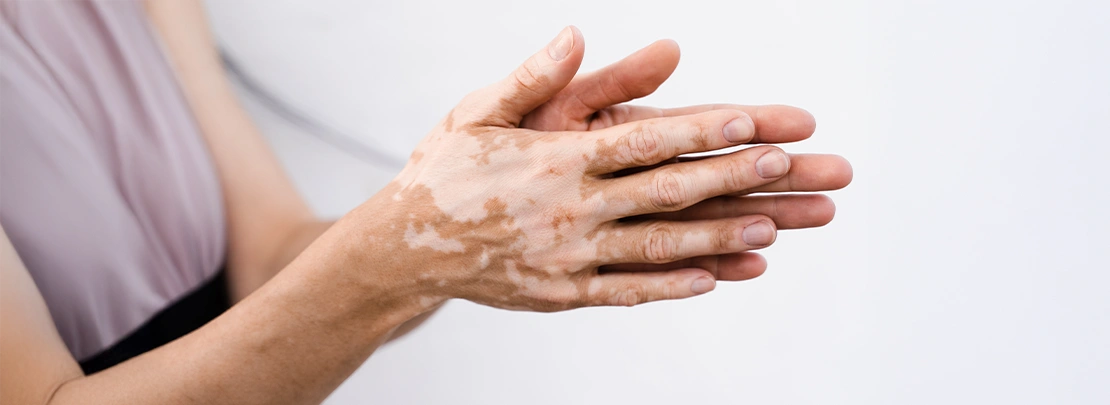
Vitiligo is a chronic skin condition in which areas of skin lose their natural pigment, creating clearly defined white or lighter patches. It develops when pigment-producing cells called melanocytes are damaged or lost, most commonly through an autoimmune process.
If you are wondering what is vitiligo, it is a condition in which melanocytes—the cells responsible for producing melanin—stop functioning normally or are destroyed, causing areas of skin to lose pigment.
Vitiligo is not contagious, and it is more than a cosmetic concern. The condition can affect confidence and quality of life, particularly when patches develop on visible areas such as the face, hands or neck.
Vitiligo can affect people of any age, gender or skin tone. The contrast is often more noticeable on medium to darker skin, but the underlying condition is the same.
According to Cleveland Clinic's clinical guide to vitiligo, approximately 1% of people worldwide have the condition. It commonly affects areas such as the hands, feet, arms and face, although patches can appear anywhere on the body.
Hair growing within affected skin may sometimes also lose pigment and become white or grey.
Treatment cannot guarantee a permanent cure, but professional care can focus on controlling progression, supporting repigmentation and protecting the skin. At Dr Batra's UAE, vitiligo is approached through detailed assessment and a personalised treatment plan rather than treating every white patch in the same way.
White Patches on Skin: Vitiligo or Something Else?
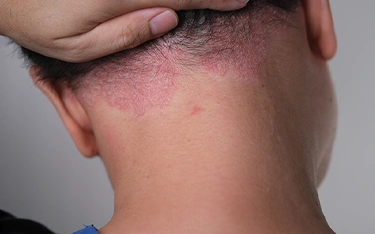
Not all white patches on skin are vitiligo.
Other conditions can create lighter areas, including:
- superficial skin infections;
- post-inflammatory pigment changes;
- pityriasis alba;
- chemical-related loss of pigment;
- congenital pigmentation differences.
Vitiligo patches are usually smooth and clearly lighter or completely white, without the surface scaling seen in some other conditions.
This distinction matters because treating every white patch as vitiligo may delay the correct diagnosis.
If a patch is new, becoming progressively lighter or spreading, a professional assessment can establish whether pigment has genuinely been lost and whether vitiligo is the likely cause.
Not sure what your white patch is? Get it assessed by the doctors at Dr Batra's UAE.
Vitiligo Symptoms and the Early Signs Most People Miss
The most recognisable vitiligo symptoms are white or depigmented patches, but early changes may be subtle.
Signs can include:
- a small pale area that gradually becomes whiter;
- clearly defined white patches;
- symmetrical patches on both sides of the body;
- colour loss around the mouth, eyes or fingers;
- premature whitening of hair within an affected area;
- pigment loss around body openings;
- new patches appearing after skin injury in some people.
Vitiligo usually does not produce thick scales or significant surface changes.
Some people notice only one or two small patches for years, while others develop new areas more quickly.
Early assessment is particularly valuable when pigment loss is still evolving because it allows the extent and activity of the condition to be documented.
Spotted early changes in your skin colour? Don't wait – book an assessment with Dr Batra's UAE.
Vitiligo Causes: Autoimmune, Genetic and Environmental Factors
The exact vitiligo causes are complex, and there is rarely a single identifiable reason.
Autoimmune factors
Vitiligo is most commonly understood as an autoimmune condition. The immune system mistakenly targets melanocytes, reducing or eliminating pigment production in affected skin.
Genetics
Genetic susceptibility also plays a role. Having a family member with vitiligo can increase the likelihood of developing it, although most relatives of people with vitiligo will not necessarily develop the condition themselves.
Environmental influences
Certain events may contribute to the development or progression of patches in susceptible individuals. These can include:
- significant skin injury;
- severe sunburn;
- repeated friction or trauma;
- psychological or physical stress in some people;
- exposure to certain chemicals.
Vitiligo can also occur alongside other autoimmune conditions, particularly thyroid-related disorders, although this does not happen in every patient.
The combination of immune, genetic and environmental influences is one reason personalised evaluation is important.
Types of Vitiligo and How Each One Progresses
Different types of vitiligo are classified according to where patches appear and how they spread.
| Type | Typical Pattern |
|---|
| Non-segmental vitiligo | Often appears on both sides of the body and may gradually develop in additional areas |
| Segmental vitiligo | Usually affects one side or one region of the body and may progress for a period before becoming more stable |
| Focal vitiligo | One or a few limited patches without a clear broader distribution |
| Mucosal vitiligo | Mainly affects areas such as the lips or other mucous membranes |
| Universal vitiligo | Extensive pigment loss involving most of the body's skin |
Non-segmental vitiligo is the most common pattern.
Knowing the type is useful because the likely course, treatment approach and realistic expectations can differ according to whether disease is localised, actively spreading or already stable.
How Vitiligo Is Diagnosed and Assessed at Dr Batra's UAE
Vitiligo is usually diagnosed through a combination of medical history and skin examination.
At Dr Batra's UAE, vitiligo assessment begins by understanding the individual's condition in detail rather than treating white patches in isolation. The consultation may assess:
- when the first patch appeared and how quickly it has changed;
- number and location of patches;
- whether new patches are appearing, and whether the condition appears stable or active;
- family history;
- previous skin injury or sunburn;
- symptoms or history of other autoimmune conditions, and other associated health concerns;
- previous treatments;
- lifestyle and stress factors;
- skin sensitivity and sun exposure.
A Wood's lamp examination may be used to examine pigment loss more clearly. Under specialised ultraviolet light, areas of true depigmentation can become easier to distinguish from some other causes of light-coloured skin.
At Dr Batra's UAE, Wood's lamp assessment can form part of the diagnostic process, helping doctors assess pigment loss, establish a baseline and monitor affected areas over time.
Additional tests are not required for everyone. Depending on the individual's medical history or symptoms, a doctor may recommend investigations for associated conditions such as thyroid disorders.
Want a clear picture of your vitiligo? Book an assessment with Dr Batra's UAE.
Will Vitiligo Spread? What Predicts Progression
One of the most difficult aspects of vitiligo is that its course can be unpredictable.
A small patch may remain unchanged for years, while another person may develop additional patches over a shorter period.
Signs that may suggest more active disease include:
- new patches appearing;
- existing patches becoming larger;
- several areas changing over a relatively short period;
- new pigment loss following cuts, burns or repeated friction.
Vitiligo cannot currently be predicted with complete accuracy.
The American Academy of Dermatology notes that treatment may help restore colour and reduce further pigment loss, with earlier treatment generally offering more opportunity to address active disease. See the AAD's vitiligo guidance.
Rather than waiting until the affected area becomes extensive, documenting changes early can help doctors understand whether vitiligo appears stable or active.
Worried your patches are spreading? Get them documented and assessed at Dr Batra's UAE.
Vitiligo Homeopathic Treatment at Dr Batra's UAE
At Dr Batra's UAE, your vitiligo treatment consultation starts with understanding your condition: when it started, how many patches you have, where they are and whether the condition appears stable or active. The doctor also asks about your family history, other health concerns such as thyroid problems, your stress and lifestyle, your sun exposure and skin sensitivity, and the treatments you have already tried. Where appropriate, a Wood's lamp examination adds a closer look at the pigment loss and a baseline for monitoring, so your treatment plan is built around your own pattern of vitiligo.
Advantages of homeopathic medicines
- Personalised: the plan is based on your vitiligo pattern, triggers and overall health, not one standard prescription.
- Looks at the pattern: it aims to understand how your condition behaves, not just to treat the visible white patches.
- Non-invasive and gentle: it uses oral medicines, and it can be combined with light-based therapy, skincare and sun-protection guidance where clinically suitable.
- Whole-person approach: it takes stress, lifestyle and emotional wellbeing into account and builds a plan around your specific needs and type of vitiligo.
Dr Batra's UAE follows a personalised approach combining homeopathic care with advanced light-based therapies where clinically suitable, together with skincare, lifestyle and emotional-support guidance.
This structured approach is particularly relevant because vitiligo behaves differently in every patient. Someone with one recent facial patch requires a different management strategy from someone with long-standing or progressively spreading pigment loss.
Dr Batra's UAE also brings more than four decades of organisational experience in homeopathic healthcare, with DHA-licensed doctors providing structured care through clinics in Dubai and Abu Dhabi.
Ready for a vitiligo plan built around your skin? Book your consultation with Dr Batra's UAE.
Sun Protection and Skin Care for Vitiligo in the UAE
Sun protection is particularly important for people with vitiligo because skin that has lost melanin can burn more easily.
This deserves extra attention in the UAE, where UV exposure can be intense throughout much of the year.
The American Academy of Dermatology recommends:
- using broad-spectrum SPF 30 or higher;
- seeking shade during strong sunlight;
- wearing protective clothing;
- reapplying sunscreen after sweating or swimming;
- avoiding tanning and unnecessary sunburn.
AAD vitiligo self-care guidance also explains that sunburn can aggravate vitiligo in some people.
Try to minimise repeated cuts, burns and friction as well, since skin injury can trigger new areas of pigment loss in susceptible individuals.
Good daily skincare should focus on protection rather than aggressive attempts to darken white patches.
Need sun-protection and skincare guidance for the UAE climate? Ask a doctor at Dr Batra's UAE.
Living With Vitiligo: Confidence, Camouflage and Support
Vitiligo does not usually cause physical disability, but its emotional effects can be significant.
A systematic review examining the psychosocial impact of vitiligo analysed 168 studies and found substantial effects involving self-esteem, stigma, anxiety, relationships and quality of life.
This is particularly relevant when patches occur on highly visible areas or when there is a strong contrast with the person's natural skin tone.
Some people are comfortable leaving vitiligo visible. Others prefer:
- cosmetic camouflage;
- colour-correcting products;
- clothing choices;
- psychological support;
- counselling;
- discussing concerns with family or friends.
There is no “correct” way to respond emotionally to vitiligo.
A good treatment plan should recognise that supporting confidence and wellbeing can be just as important as monitoring the skin itself.
Vitiligo affecting your confidence? You don't have to manage it alone. Speak to a doctor at Dr Batra's UAE.
Disclaimer: This article is for informational purposes only and is not a substitute for professional medical advice, diagnosis or treatment. Treatment outcomes vary between individuals. Please consult a qualified healthcare professional or Dr Batra’s doctor for personalised guidance.






 Call Now