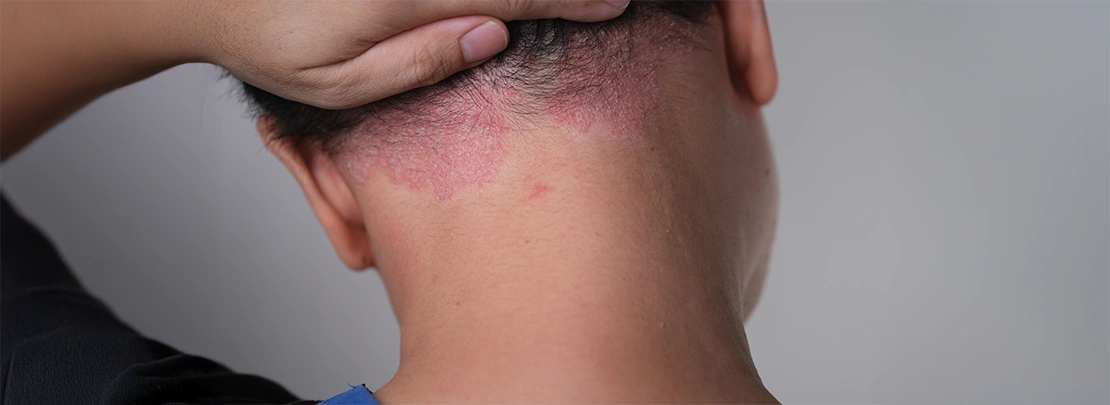
Scalp psoriasis is a chronic inflammatory condition in which skin-cell turnover becomes abnormally accelerated, producing thickened, scaly and sometimes intensely itchy patches known as plaques. It is an immune-mediated condition. It may affect a small area or extend across much of the scalp and beyond the hairline. The scalp is one of the most frequently affected areas in people with psoriasis, Because the flakes can resemble dandruff, people sometimes spend months changing shampoos before realising the underlying condition is psoriasis. Persistent scaling, well-defined plaques, redness or recurrent itching deserve proper assessment.
Having psoriasis on the scalp does not mean the hair itself is diseased. When people refer to psoriasis in hair, the condition is actually affecting the scalp skin beneath and around the hair follicles.
Psoriasis in hair is actually psoriasis affecting the scalp skin and hair-follicle environment.
The condition is driven primarily by abnormal immune activity. This causes inflammatory signals to accelerate the normal skin-cell renewal process, resulting in the characteristic build-up of scales and plaques.
Psoriasis is not contagious, and it is not caused by poor hygiene.
The hair itself does not cause psoriasis either. However, the presence of hair can make scalp psoriasis more challenging to manage because scales can become trapped between hairs and some treatments are harder to distribute evenly across the scalp.
Scalp psoriasis vs dandruff is one of the most common areas of confusion because all three conditions can cause flaking and itching.
| Condition | Typical Appearance | Other Clues |
|---|
| Scalp psoriasis | Thick, well-defined white or silvery scales | Red or inflamed plaques that may extend beyond the hairline |
| Dandruff | Loose white or yellowish flakes | Usually less sharply defined; may occur with an oily or irritated scalp |
| Seborrhoeic dermatitis | Greasy or yellowish scaling | Redness, oiliness and involvement around the ears, brows or sides of the nose may occur |
Psoriasis usually produces thicker and more clearly defined plaques than ordinary dandruff. However, mild scalp psoriasis can sometimes be difficult to distinguish visually.
This is why recurring "dandruff" that does not respond as expected should be evaluated rather than repeatedly self-treated.
Not sure whether it's dandruff or scalp psoriasis? Consult a Senior Doctor at Dr Batra's UAE, or take an AI Scalp Scan Analysis to find out the reason behind your symptoms.
Scalp Psoriasis Symptoms: From Mild Flaking to Thick Plaques
Scalp psoriasis symptoms vary from mild scaling to extensive plaques.
Common symptoms include:
- dry or silvery-white scales;
- red or inflamed areas;
- itching;
- scalp tightness or discomfort;
- cracking or soreness;
- flaking onto clothing;
- plaques extending around the hairline;
- temporary hair shedding in some cases.
Some people experience very little discomfort despite obvious plaques, while others experience severe itching even when the affected area appears relatively small.
Scratching can make the scalp sore and may cause bleeding. Frequent scratching or forcefully removing scales can also damage hair shafts and contribute to temporary shedding.
Changes in severity should therefore be monitored rather than judged only by the amount of visible flaking.
Does Scalp Psoriasis Cause Hair Loss?
Scalp psoriasis does not usually destroy hair follicles, so permanent hair loss is not typical.
However, temporary shedding may occur when:
- the scalp is severely inflamed;
- plaques are repeatedly scratched;
- scales are aggressively removed;
- hair is frequently pulled while attempting to clear the scalp;
- inflammation disrupts the normal hair-growth cycle.
Once inflammation is better controlled and scratching reduces, hair may recover if the follicles remain healthy.
Persistent hair thinning should still be assessed separately because other hair-loss conditions can occur alongside psoriasis.
Noticing hair shedding along with scalp flaking? Get your scalp and hair assessed at Dr Batra's UAE.
Homeopathic Treatment for Scalp Psoriasis at Dr Batra's UAE
At Dr Batra's UAE, scalp psoriasis care follows a personalised and holistic approach, focusing on individual symptoms, recurring triggers, scalp health and overall well-being.
The treatment journey begins with a detailed 30–40-minute homeopathic consultation, where experienced doctors assess the severity of psoriasis, frequency of flare-ups, itching, scaling, associated hair fall, medical history, lifestyle and stress-related triggers.
A detailed scalp examination, supported by AI-powered scalp analysis, where appropriate, helps doctors assess scalp condition and identify areas requiring attention. The clinical assessment also helps differentiate scalp psoriasis from conditions such as dandruff or seborrhoeic dermatitis.
Based on the findings, doctors recommend an individualised care plan incorporating homeopathy, scalp-care guidance and lifestyle recommendations. Additional evidence-based dermatological treatment or specialist referral may be recommended where clinically necessary.
Managing Scalp Psoriasis in Day to Day Life
Daily scalp care can make a meaningful difference to comfort.
Helpful habits include:
- Wash gently. Avoid aggressively rubbing the scalp.
- Do not pick plaques. Forceful scale removal can irritate the skin and damage hair.
- Loosen scales gradually. Follow professional guidance when scale build-up is significant.
- Avoid very hot water. Excess heat may aggravate dryness and irritation.
- Reduce scratching. Keep nails short if itching frequently leads to accidental scalp damage.
- Choose hair products carefully. Fragrances and harsh styling products may irritate sensitive scalps.
- Treat the scalp, not just the flakes. Removing visible scale without managing the underlying inflammation may provide only temporary improvement.
Need guidance on safe scale removal and scalp care? Ask a doctor at Dr Batra's UAE.
Diet and Lifestyle Changes That Reduce Scalp Psoriasis Flares
There is no single "psoriasis diet" proven to eliminate scalp psoriasis.
A balanced lifestyle can nevertheless support overall health and may help individuals identify factors associated with their own flare-ups.
Helpful strategies include:
- maintaining a balanced diet;
- managing weight where appropriate;
- getting regular physical activity;
- reducing smoking;
- moderating alcohol;
- managing prolonged stress;
- maintaining adequate sleep;
- tracking individual flare triggers.
Nutritional supplements should not automatically be used as psoriasis treatment unless there is a specific reason or identified deficiency.
Stress management deserves particular attention because psoriasis itself can cause stress, while stress may also coincide with worsening symptoms, creating a cycle that some patients find difficult to manage.
Don't wait for it to worsen. Meet a Senior Doctor at Dr Batra's UAE for a consultation today.
Disclaimer: This article is for informational purposes only and is not a substitute for professional medical advice, diagnosis or treatment. Treatment outcomes vary between individuals. Please consult a qualified healthcare professional or Dr Batra's doctor for personalised guidance.





 Call Now