Some people experience more than one form.
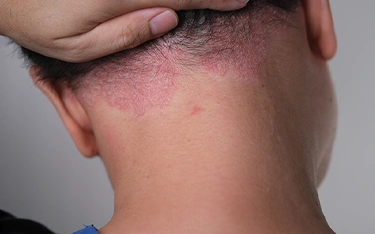
Scalp involvement is particularly common and may initially be mistaken for severe dandruff.
Psoriasis does not always look bright red.
On lighter skin, plaques may appear pink or red with whitish or silvery scale. On brown or darker skin tones, inflammation may appear purple, violet, dark brown, grey or deeper than the surrounding skin.
A 2022 clinical review of psoriasis in skin of colour highlighted important differences in how psoriasis can appear in people with diverse skin tones. The review also noted that pigmentation changes may remain after active plaques improve.
This is especially relevant in the UAE's diverse population. Diagnosis should therefore consider the texture, scale and distribution of lesions rather than relying only on redness.
Is psoriasis contagious? No.
Psoriasis develops because of immune and genetic factors—not because of bacteria, fungi or poor hygiene.
This distinction is important because visible plaques can sometimes lead to unnecessary social stigma.
People with psoriasis should not need to hide their skin because others believe the condition is infectious. Better awareness can help reduce the embarrassment and isolation that some patients experience.
Psoriasis and eczema can both cause itching, dryness and inflammation, but they are different conditions.
| Feature | Psoriasis | Eczema |
|---|
| Typical appearance | More clearly defined, thickened or scaly plaques | Often dry, inflamed or weeping skin |
| Scale | Frequently thicker | Usually finer or less plaque-like |
| Itching | Can range from mild to severe | Often prominent |
| Common areas | Elbows, knees, scalp, lower back | Often skin folds, hands and face depending on type |
| Underlying process | Immune-mediated inflammatory disease | Skin-barrier and immune dysfunction |
Appearance alone is not always enough to distinguish them, particularly on darker skin tones or when symptoms are mild.
Persistent or recurring skin patches should therefore be professionally assessed instead of repeatedly trying products intended for a different condition.
Not sure if it's psoriasis or eczema? Meet a Senior Doctor at Dr Batra's UAE for a consultation, or take an AI Scalp Scan if the patches are on your scalp.
Beyond the Skin: Health Conditions Linked to Psoriasis
Psoriasis is increasingly understood as more than a skin-limited condition.
Some people with psoriasis have an increased likelihood of developing other health concerns, particularly when psoriasis is more extensive.
A review of cardiovascular and metabolic conditions associated with psoriasis describes links with conditions including:
- psoriatic arthritis;
- cardiovascular disease;
- obesity;
- metabolic syndrome;
- diabetes;
- inflammatory bowel disease;
- emotional and psychological concerns.
This does not mean everyone with psoriasis will develop these conditions.
However, joint pain, persistent stiffness, swelling or other significant changes in health should be discussed with a qualified healthcare professional rather than assumed to be unrelated to psoriasis.
A comprehensive approach to psoriasis should therefore consider overall wellbeing alongside the visible skin symptoms.
How Psoriasis Is Diagnosed
Psoriasis is commonly diagnosed through a combination of clinical examination and medical history.
A doctor may assess:
- the appearance and location of plaques;
- scale thickness;
- skin colour changes;
- scalp involvement;
- nail changes;
- itching or discomfort;
- duration and recurrence;
- family history;
- possible triggers;
- joint symptoms.
Sometimes additional investigation is required when another skin condition needs to be ruled out.
At Dr Batra's UAE, detailed consultation is an important part of the process because skin conditions that appear similar may require different approaches.
For recurring or previously diagnosed psoriasis, understanding the pattern of flare-ups can also help shape a more personalised long-term strategy.
Don't wait for it to worsen. Meet a Senior Doctor at Dr Batra's UAE for a clear diagnosis.
How to Cure Psoriasis Permanently: What Is Realistically Achievable
People searching how to cure psoriasis permanently understandably want a treatment that stops the condition from returning.
Currently, psoriasis is regarded as a chronic condition without a guaranteed permanent cure. Cleveland Clinic notes that psoriasis can flare unexpectedly and that treatment focuses on managing symptoms.
This does not mean that nothing can be done.
Many people can achieve significant periods of symptom control. The realistic goals of psoriasis management include:
- reducing the severity of plaques;
- managing itching and discomfort;
- supporting healthier skin;
- identifying individual triggers;
- reducing the frequency or burden of flare-ups;
- maintaining quality of life.
Treatment outcomes differ between individuals.
At Dr Batra's UAE, the objective is therefore not to make unrealistic cure promises but to build a personalised approach to long-term psoriasis management based on the patient's presentation and needs.
Looking for long-term control, not quick fixes? Book a consultation with Dr Batra's UAE.
Psoriasis Homeopathic Treatment
At Dr Batra's UAE, your consultation starts with understanding your psoriasis: where it appears, how long it has been present, how severe it is and how often it flares. The doctor also asks about itching, cracking or discomfort, scalp and nail involvement, your stress, sleep, diet and lifestyle, what seems to trigger your flare-ups, and the treatments you have already tried. Where appropriate, AI-assisted scalp analysis adds a closer look at the scalp, so your treatment plan is built around your own pattern of psoriasis.
Advantages of homeopathic medicines
Personalised: the plan is based on your psoriasis pattern, triggers and overall health, not one standard prescription.
Looks at the pattern: it aims to understand why flare-ups keep returning, not just to settle the visible plaques.
Non-invasive and gentle: it uses oral medicines, and it can be combined with skincare and lifestyle guidance.
Whole-person approach: it takes stress, lifestyle and overall health into account and builds a plan around your specific needs and type of psoriasis.
Closing
Psoriasis is a long-term condition, and treating only the visible plaques often means they return. Better control comes from understanding why your skin flares, whether that is stress, illness, skin injury, weather or other individual triggers.
At Dr Batra's UAE, your care begins with a detailed consultation, so your plan is built around your type of psoriasis, your skin and your lifestyle. It combines personalised homeopathic care with practical guidance on skincare, diet, sleep and stress, so your skin is supported from the inside as well as the outside. Where clinically needed, the doctor may also recommend additional dermatological care or a specialist referral.
Psoriasis can be managed, and you don't have to keep guessing which cream or remedy to try next. The sooner you get the right assessment, the sooner you can start working towards longer periods of comfortable skin.
Ready for calmer, more comfortable skin? Book your consultation with Dr Batra's UAE today.
Living With Psoriasis: Daily Skincare and Lifestyle Management
Daily habits can help support psoriasis management between flare-ups.
Useful measures include:
- Moisturise regularly to help reduce dryness and cracking.
- Avoid picking or scratching plaques, which can further injure the skin.
- Use gentle skincare products that do not unnecessarily irritate sensitive areas.
- Avoid very hot showers if they worsen dryness or itching.
- Manage prolonged stress through realistic techniques that suit your lifestyle.
- Exercise regularly and maintain a balanced diet.
- Avoid smoking and moderate alcohol consumption.
- Identify individual triggers by noting when and where flare-ups occur.
There is no single diet proven to permanently eliminate psoriasis. Extreme elimination diets or unverified supplements should therefore not replace proper assessment and treatment.
Consistency is more important than repeatedly changing routines during every flare.
Need guidance on a skincare and lifestyle routine that suits your skin? Ask a doctor at Dr Batra's UAE.
Psoriasis Treatment at Dr Batra's UAE
At Dr Batra's UAE, psoriasis treatment is centred on understanding the individual behind the skin condition.
The consultation may consider:
- where psoriasis appears;
- how long the condition has been present;
- severity and frequency of flare-ups;
- itching, cracking or discomfort;
- scalp and nail involvement;
- previous episodes and treatments;
- stress and lifestyle factors;
- individual triggers;
- associated health concerns;
- overall medical history.
This detailed assessment allows Dr Batra's UAE doctors to develop a personalised homeopathic treatment plan rather than using the same approach for every patient.
The focus goes beyond temporarily improving the appearance of plaques. Dr Batra's UAE considers the patient's recurring symptom pattern, possible triggers, lifestyle and overall skin health when planning longer-term care.
This personalised approach can be particularly valuable for people who have experienced repeated flare-ups, struggled to understand their triggers or found that their psoriasis continues to interfere with comfort, confidence or everyday life.
With an established legacy in homeopathic care and dedicated clinics in the UAE, Dr Batra's combines professional assessment, personalised homeopathic care and practical lifestyle guidance to help patients manage chronic skin concerns in a structured way.
If persistent scaling, itching or recurring plaques are affecting your skin or quality of life, consulting Dr Batra's UAE can help clarify the condition and establish a personalised management plan.
Explore Dr Batra's UAE's personalised psoriasis treatment in Dubai and Abu Dhabi. Visit doctors at Dr. Batras UAE.
Disclaimer: This article is for informational purposes only and is not a substitute for professional medical advice, diagnosis or treatment. Treatment outcomes vary between individuals. Please consult a qualified healthcare professional or Dr Batra’s doctor for personalised guidance.








 Call Now