Hyaluronic acid is a humectant naturally found in the skin that attracts and holds water, helping skin stay hydrated and supple; its levels decline with age and skin ageing. Its main benefits are improved hydration, smoother-looking fine lines and plumper-looking skin. Apply it to slightly damp skin, then follow with moisturiser to help seal the hydration in.
If your skin feels tight after cleansing, looks dull by the afternoon or develops fine dehydration lines despite using moisturiser, hyaluronic acid may be one of the most useful ingredients to add to your routine.
But it is important to understand what it can — and cannot — do.
A hyaluronic acid serum can hydrate dehydrated skin. It cannot diagnose why your skin remains persistently dry, inflamed, itchy or sensitive.
What Is Hyaluronic Acid and How Does It Work on Skin?
Hyaluronic acid, also called hyaluronan, is a naturally occurring sugar molecule found throughout the body, with a significant amount present in the skin.
Its most useful property in skincare is its ability to bind water.
In simple terms, it works as a humectant. It attracts and holds moisture, helping the outer layers of the skin feel softer, smoother and better hydrated.
This is why hyaluronic acid for skin appears in so many:
- serums
- moisturisers
- eye creams
- masks
- lotions
- sunscreens
Natural skin hyaluronic acid also changes with ageing. Research links ageing with changes in the amount and distribution of hyaluronic acid within the skin, contributing to reduced hydration and elasticity.
Topically applied hyaluronic acid does not reverse ageing or replace all of the naturally occurring HA deeper inside the skin. What it does particularly well is improve hydration and temporarily make dehydrated skin look smoother and plumper.
That distinction matters.
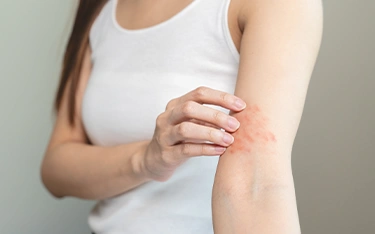
If dryness is simply due to dehydration, improving the skincare routine may be enough. But if dryness comes with persistent itching, scaling, redness, sensitivity or repeated flare-ups, the problem may involve the skin barrier or an underlying condition.
That is where professional skin assessment becomes more useful than repeatedly changing serums. Consult a Senior Doctor at Dr Batra's® UAE to understand your skin's needs and explore personalised care options.
Does Molecular Weight Matter in Hyaluronic Acid?
Yes. Not every hyaluronic acid molecule is the same size, and molecular weight influences how it behaves on the skin.
Higher-molecular-weight HA molecules are relatively large. They tend to remain closer to the surface, where they help form a hydrating film and reduce moisture loss.
Lower-molecular-weight forms are smaller and can penetrate further into the outer layers of the skin. This does not mean “lower is always better”.
Different molecular weights can perform different functions. A well-formulated product may therefore combine several forms of hyaluronic acid to provide hydration at different levels of the skin surface.
The overall formulation matters too. Concentration, other moisturising ingredients and what you apply afterwards can influence the result.
What Are the Benefits of Hyaluronic Acid for Skin?
The strongest hyaluronic acid benefits relate to hydration.
Helps dehydrated skin hold moisture
Hyaluronic acid attracts and retains water, helping improve hydration in the outer skin layers.
This can be particularly useful when skin feels tight, rough or uncomfortable.
Makes skin appear plumper
When dehydrated skin takes up more moisture, the surface can look fuller and smoother.
This is why hyaluronic acid serum benefits often include a temporary “plumping” effect.
Softens the appearance of fine dehydration lines
Hydration cannot erase structural wrinkles, but it can make fine lines caused or exaggerated by dryness look softer.
Supports a more comfortable skin barrier
Adequately hydrated skin generally feels softer and less tight.
HA can therefore be useful alongside other barrier-supporting ingredients, particularly when skincare treatments such as retinoids cause dryness.
Works for many skin types
Unlike heavy oils or rich occlusive creams, hyaluronic acid itself is lightweight. It can therefore be useful for dry, combination, oily and acne-prone skin depending on the formulation used.
Incase you have skin dull, dry or dehydrated skin issues, Get a skin analysis at Dr Batra's® and understand what your skin actually needs before adding another product to your routine.
Topical, Oral and Injectable Hyaluronic Acid: What's the Difference?
The words “hyaluronic acid” can refer to very different products.
| Type | What it does | What to know |
|---|
| Topical HA | Attracts and retains moisture in and around the outer skin layers | Found in serums and moisturisers; useful mainly for hydration and temporarily smoother-looking skin |
| Oral HA | Taken as a dietary supplement | Research is emerging; some trials report improvements in hydration and elasticity, but supplements are not essential for everyone |
| Injectable HA | Placed beneath the skin by a qualified medical professional | Used in dermal fillers to restore or alter volume; this is a medical/aesthetic procedure, not the same as using a serum |
A 2025 meta-analysis of seven randomised trials found oral HA supplementation was associated with improvements in skin hydration, elasticity and wrinkle depth, although the researchers noted variation between studies and called for stronger evidence.
That does not mean everyone needs an oral supplement.
Topical HA remains the simplest way to use the ingredient for everyday hydration.
Injectable HA is entirely different. Dermal fillers place material beneath the skin and carry procedural risks. They should only be administered by appropriately qualified professionals after individual assessment.
How to Use Hyaluronic Acid in Your Skincare Routine (Step-by-Step Checklist)
To be presented with Sequential ART
A good hyaluronic acid serum does not need a complicated routine.
Use this simple sequence:
- Cleanse gently.
Remove sunscreen, makeup, oil and impurities without leaving the skin excessively tight or stripped. - Leave the skin slightly damp.
Hyaluronic acid works by attracting water. Applying it to damp skin gives it readily available moisture to bind. - Apply your hyaluronic acid serum.
Use the amount recommended by the manufacturer. More product does not necessarily produce more hydration. - Follow with moisturiser.
This is particularly important. Your moisturiser helps seal water into the skin and reduce evaporation. - Apply sunscreen in the morning.
Daily broad-spectrum sun protection remains one of the most important steps for preventing premature skin ageing.
The best time to apply hyaluronic acid can be morning, evening or both, depending on the formulation and your skin.
The key is consistency and layering it correctly.
Using Hyaluronic Acid in the UAE: AC, Low Humidity and Sun Exposure
Skincare routines do not exist separately from the environment.
In the UAE, many of us move repeatedly between intense outdoor heat and heavily air-conditioned homes, offices, malls and cars.
Air conditioning lowers indoor moisture levels, which can contribute to dry skin. Cleveland Clinic Abu Dhabi notes that reduced moisture associated with air-conditioned environments can cause skin dryness.
This makes the way you use hyaluronic acid for dry skin particularly important.
Applying HA serum without following it with an appropriate moisturiser may not be enough for very dry skin. A moisturising layer helps trap the water attracted by the humectant and reduces evaporation.
Sun protection is equally important.
UV exposure contributes significantly to premature skin ageing, including loss of elasticity, pigmentation and wrinkles.
A practical UAE morning routine can therefore be:
gentle cleansing → treatment serum → hyaluronic acid if appropriate → moisturiser → broad-spectrum sunscreen
At Dr Batra's®, we also consider environmental exposure when evaluating recurring dryness and sensitivity because the same routine will not suit every person living in Dubai or Abu Dhabi. Visit a Senior Doctor at Dr Batra's® UAE for personalised skin care guidance designed around your skin's unique needs.
Can You Use Hyaluronic Acid with Vitamin C, Retinol and Niacinamide?
Usually, yes. Hyaluronic acid is one of the easier skincare ingredients to combine.
| Combination | Can they be used together? | How to use |
|---|
| Hyaluronic acid + Vitamin C | Yes | If using separate products, vitamin C can generally go first, followed by HA and moisturiser |
| Hyaluronic acid + Retinol | Yes | HA can help counter some of the dryness and irritation associated with retinol |
| Hyaluronic acid + Niacinamide | Yes | Both can fit comfortably into a hydrating, barrier-supportive routine |
If you are asking, “Can I use retinol and hyaluronic acid together?”, the answer is generally yes.
Hyaluronic acid is moisturising rather than exfoliating, so it can be particularly useful when retinol leaves the skin feeling dry or tight.
Likewise, hyaluronic acid and niacinamide together can work well for someone wanting hydration plus barrier support.
But more products are not always better.
If your skin stings, burns, becomes persistently red or starts flaking after introducing several active ingredients, simplify the routine and have the skin assessed.
Which Skin Types Benefit from Hyaluronic Acid?
HA can suit most skin types, but the formulation around it matters.
| Skin type | How HA may help | What to look for |
|---|
| Dry skin | Adds hydration and helps reduce tightness | HA followed by a richer barrier-supporting moisturiser |
| Oily skin | Provides lightweight hydration without necessarily adding oil | Gel or lightweight non-comedogenic formulations |
| Combination skin | Hydrates without requiring heavy cream everywhere | Lightweight serum plus moisturiser adjusted by area |
| Acne-prone skin | Helps manage dehydration caused by some acne treatments | Fragrance-free, non-comedogenic formulation |
| Sensitive skin | HA itself is usually well tolerated | Simple formulation without unnecessary fragrance or irritating actives |
| Mature skin | Can temporarily plump dehydration lines and improve surface smoothness | Multi-molecular-weight HA plus moisturiser and sunscreen |
Hyaluronic acid itself is not an acne treatment, eczema treatment or pigmentation treatment.
It is a hydration ingredient.
That is why treating every concern with another serum often becomes frustrating. If acne, eczema, sensitivity or pigmentation persists, the skin needs a diagnosis rather than another cosmetic layer.
How Long Does Hyaluronic Acid Take to Show Results?
Hydration can be noticeable quite quickly.
Some people notice softer, more comfortable skin soon after application. Visible plumping of dehydration lines may take several days of consistent use.
Harvard Health notes that people may notice mild softening of wrinkles, greater fullness and less dryness after around a week, while multi-molecular-weight formulas have shown improvements in dryness and roughness within approximately one to two weeks.
More persistent dryness may take longer.
And if several weeks of good skincare make almost no difference, it is worth asking whether the problem is actually simple dehydration.
How Dr Batra's® Treats Underlying Skin Conditions
This is where skincare and skin treatment in Dubai need to be separated.
A serum can hydrate skin.
It cannot tell you why your skin repeatedly becomes inflamed, itchy, flaky, congested or hypersensitive.
Persistent dryness can occur alongside conditions such as:
- eczema or atopic dermatitis
- contact dermatitis
- psoriasis
- acne treatments that impair the barrier
- chronic sensitivity
- other inflammatory skin conditions
At Dr Batra's® UAE, we begin by understanding the skin rather than automatically recommending another moisturiser.
Advanced skin analysis
Dr Batra's® AI Skin Pro uses advanced imaging and different light modes to evaluate skin characteristics that may not be obvious from looking in the mirror.
The assessment can examine areas such as:
- hydration
- texture
- pigmentation
- signs of premature ageing
- skin type
- other visible and underlying concerns
The analysis is then reviewed alongside a doctor consultation so technology supports clinical judgement rather than replacing it.
A personalised doctor consultation
Our doctors look at more than the dry patch in front of them.
Depending on the concern, we may discuss:
- when symptoms started
- how often they return
- skincare products being used
- environmental triggers
- allergies or sensitivities
- stress
- sleep
- diet and lifestyle
- personal and family history
- previous skin treatments and how the skin responded
For chronic conditions such as eczema, Dr Batra's® uses an individualised homeopathic approach alongside skin and trigger management. Our current eczema pathway combines an in-depth consultation, objective skin assessment, a personalised homeopathic plan and regular follow-up.
This is the principle behind homeopathy for sensitive skin at Dr Batra's®: the treatment is chosen according to the individual condition and wider symptom pattern rather than prescribing one standard remedy for everyone with dryness or irritation.
Advanced skin treatments where appropriate
For skin that is primarily dehydrated, dull or showing early changes in texture, a doctor may also recommend an advanced skin treatment depending on the assessment.
Dr Batra's® Signature Facial begins with computerised skin analysis and uses a customised treatment approach to cleanse, hydrate and address individual skin concerns.
The important part is selection.
Not every patient needs the same facial, serum or homeopathic plan. The treatment should follow the diagnosis.
That is what makes a professional Dr Batra's® skin assessment more useful than continuing to experiment with products when the underlying concern is still unclear.
To know more about the treatment , consult senior Doctors at DrBatras UAE and get a Personalised Plan for your Skin.
When Should You See a Doctor About Dry or Sensitive Skin?
Occasional dryness usually responds to a gentler routine and appropriate moisturisation.
Professional assessment becomes more important if you have:
- dryness that keeps returning
- persistent itching
- cracking or bleeding
- scaling
- repeated redness
- burning or stinging
- oozing or crusting
- a recurring rash
- sudden changes in skin texture
- symptoms severe enough to disturb sleep
- suspected eczema, dermatitis or psoriasis
You should also seek advice if a product repeatedly causes a reaction rather than assuming your skin is simply “purging”.
At Dr Batra's®, the objective is to understand whether you are dealing with dehydration, barrier damage or a skin condition that needs a more structured treatment plan.
Visit a Senior Doctor at Dr Batra's® UAE for a detailed skin assessment and a personalised treatment plan tailored to your needs.
Medical disclaimer: This article provides general educational information and does not replace individual medical diagnosis or treatment. Skin conditions and treatment suitability vary between individuals. Persistent or worsening skin symptoms should be assessed by an appropriately qualified healthcare professional.







 Call Now