Eczema is a group of inflammatory skin conditions that can make the skin dry, itchy, sensitive, cracked or inflamed. If you are searching what is eczema, it is important to know that eczema is not one single disease. Atopic dermatitis is the best-known type, but contact, dyshidrotic, nummular, seborrhoeic and hand eczema can behave differently and have different triggers.
Eczema can affect babies, children and adults, and symptoms often move between flare-ups and quieter periods. It is not contagious. Unlike an infection, eczema cannot be passed from one person to another.
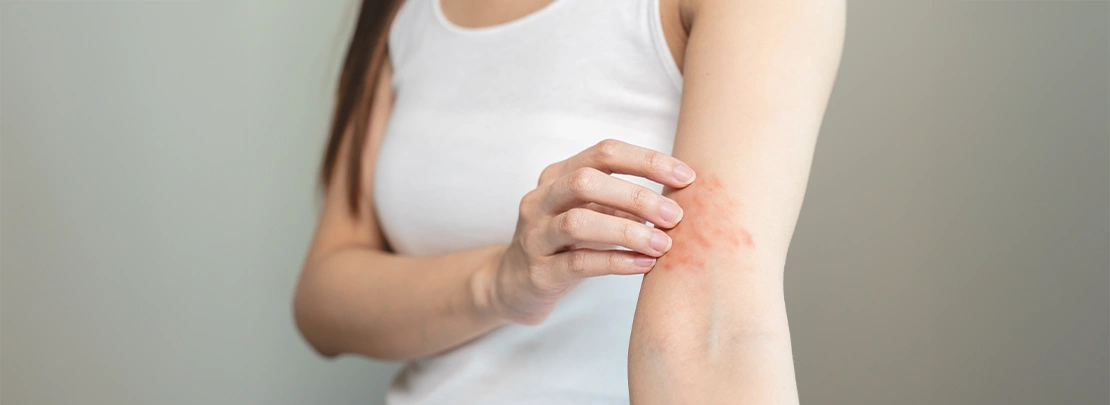
Itching is often one of the earliest and most troublesome symptoms. Scratching then further damages the skin barrier, creating an itch-scratch cycle that can increase inflammation and discomfort.
Other itchy rashes may be caused by psoriasis, fungal infections, allergic reactions, heat or other skin diseases. Persistent rashes should therefore be properly assessed rather than automatically labelled eczema.
For people experiencing repeated itching or rashes in the UAE, identifying the type and triggers matters. At Dr Batra's UAE, eczema care begins with a detailed assessment of the skin, recurrence pattern, lifestyle and possible triggers before a personalised management plan is recommended.
Struggling with an itchy, recurring rash? Book a skin consultation with Dr Batra's UAE.
Eczema Types: Atopic, Contact, Dyshidrotic, Nummular, Seborrhoeic and Hand Eczema
Different eczema types have different patterns and triggers.
| Eczema Type | Typical Pattern | Common Clues |
|---|
| Atopic dermatitis | Chronic or recurring itchy, dry inflammation | Often linked with personal or family history of allergies, asthma or hay fever |
| Contact dermatitis | Rash where skin contacts an irritant or allergen | May burn, itch or appear after using a particular product |
| Dyshidrotic eczema | Small, intensely itchy blisters | Commonly affects fingers, palms and soles |
| Nummular eczema | Round or coin-shaped itchy patches | Often appears on arms, legs or torso |
| Seborrhoeic dermatitis | Flaky or greasy scaling | Common around scalp, eyebrows, ears or sides of the nose |
| Hand eczema | Dry, cracked, inflamed hands | Often worsened by frequent washing, sanitiser, chemicals or occupational exposure |
A person can sometimes have more than one type of eczema at the same time.
This is important for treatment because a rash caused by repeated chemical exposure requires a different management strategy from chronic atopic dermatitis.
Eczema Symptoms and How They Present on Different Skin Tones
Common eczema symptoms include:
- intense itching;
- dry or rough skin;
- scaling or flaking;
- bumps;
- cracking;
- swelling;
- oozing or crusting during some flares;
- thickened skin after repeated scratching;
- changes in skin colour after inflammation.
Eczema does not look identical on every skin tone.
On lighter skin, inflammation is often described as pink or red. On medium-to-darker skin, affected areas may appear brown, grey, purple, violet or darker than the surrounding skin.
A 2023 clinical review on diagnosing atopic dermatitis in skin of colour highlighted that eczema can show more papular, thickened or pigment-changing presentations in darker skin and that redness may be less obvious. This can sometimes lead to disease severity being underestimated.
This is especially relevant in the UAE's diverse population. Doctors should assess texture, itching, swelling, scale and distribution—not simply look for redness.
Not sure whether your rash is eczema? Get it assessed by the doctors at Dr Batra's UAE.
Eczema Causes: Skin Barrier Failure, Immunity and Genetics
The eczema causes behind atopic dermatitis involve an interaction between the skin barrier, immune system, genetics and environment.
Healthy skin works like a protective wall. It helps retain moisture while keeping irritants and allergens outside.
In eczema-prone skin, that barrier can be less effective. Moisture escapes more easily, while irritants and allergens can enter more readily. The immune system may then respond with inflammation and itching.
A 2025 systematic review and meta-analysis on skin-barrier genes and atopic dermatitis found significant associations between atopic dermatitis and genetic variants involved in maintaining skin-barrier integrity.
This helps explain why eczema frequently runs in families.
Factors involved can include:
- inherited skin-barrier differences;
- immune-system sensitivity;
- environmental irritants;
- allergens;
- dry skin;
- stress;
- individual trigger exposure.
Eczema is therefore not caused by poor hygiene, and washing the skin more aggressively usually does not solve the problem.
Eczema Triggers in the UAE Climate
The UAE environment can create a challenging combination for eczema-prone skin.
Heat and sweating
Sweat can irritate sensitive skin and intensify itching. During hot months, staying in sweaty clothes for long periods may aggravate discomfort.
Air conditioning
Constant air conditioning can contribute to a dry indoor environment, which may increase moisture loss from already vulnerable skin.
Rapid temperature changes
Moving repeatedly between intense outdoor heat and cool indoor environments may leave sensitive skin feeling dry or uncomfortable.
Frequent showering
Extra showers after exercise or outdoor activity can help remove sweat, but very hot water and harsh cleansing can strip protective oils from the skin.
Swimming
Pool chemicals may irritate some people with eczema, although reactions vary.
Fragrances and skincare products
Perfumes, fragranced body products, detergents and certain cosmetics may act as irritants or contact triggers.
The American Academy of Dermatology recommends avoiding overheating and excessive dryness and keeping temperature and humidity comfortable where possible.
For UAE residents, good eczema management means adapting skincare to the environment rather than trying to avoid the climate completely.
Flare-ups worse in the UAE heat and air conditioning? Get guidance suited to your lifestyle from Dr Batra's UAE.
Eczema vs Psoriasis vs Fungal Rash
These conditions can look similar, but their underlying causes are different.
| Feature | Eczema | Psoriasis | Fungal Rash |
|---|
| Itching | Often intense | Can itch but varies | Frequently itchy |
| Appearance | Dry, inflamed, cracked or bumpy | Often thicker and more sharply defined plaques | May form an expanding or ring-like pattern |
| Scale | Usually fine to moderate | Often thicker | Can scale around the edges |
| Cause | Barrier and immune dysfunction | Immune-mediated inflammatory disease | Fungal infection |
| Contagious? | No | No | Some fungal infections can spread between people |
Eczema and psoriasis are both inflammatory conditions, but they are not interchangeable.
A fungal rash may sometimes resemble eczema, particularly when it becomes inflamed. Using the wrong treatment may allow the true condition to persist.
If a rash develops a defined expanding edge, spreads despite eczema care or behaves differently from previous flare-ups, professional assessment becomes particularly important.
Rash spreading or not responding to your usual care? Book a consultation with Dr Batra's UAE.
How Eczema Is Diagnosed and Assessed at Dr Batra's UAE
There is no single blood test that confirms every case of eczema. Diagnosis generally begins with a detailed examination and medical history.
At Dr Batra's UAE, eczema treatment begins by understanding why the patient's skin keeps flaring, rather than looking only at the rash present on the day of consultation. The doctor may ask about:
- when the rash started and where it appears;
- eczema type and location;
- severity of itching;
- duration and frequency of flare-ups;
- dry, cracked or thickened skin;
- whether symptoms disturb sleep;
- personal or family history of eczema, asthma or allergies;
- products used on the skin, including soaps, detergents and skincare;
- occupational exposure;
- weather and environmental triggers;
- stress;
- previous treatments and how the skin responded.
According to Cleveland Clinic, further testing may sometimes be considered when another diagnosis needs to be ruled out. Depending on the situation, this might include allergy evaluation, blood tests or skin sampling.
At Dr Batra's UAE, assessment also focuses on recurrence patterns and individual triggers, because understanding why flare-ups keep returning is an important part of building a sustainable skin-care plan. Want to understand why your eczema keeps returning? Book an assessment with Dr Batra's UAE.
How to Cure Eczema Permanently: What Treatment Can Realistically Achieve
People searching how to cure eczema permanently are understandably looking for a solution that prevents another flare. At present, chronic eczema—particularly atopic dermatitis—does not have a guaranteed permanent cure. That does not mean eczema cannot be managed successfully. Realistic treatment goals include:
- reducing itching;
- calming active inflammation;
- repairing and protecting the skin barrier;
- reducing the frequency and severity of flare-ups;
- identifying avoidable triggers;
- preventing scratching and secondary skin damage;
- maintaining longer periods of comfortable skin.
Some children experience substantial improvement as they grow older, while other people continue to experience intermittent eczema into adulthood.
The more useful approach is therefore long-term control rather than unrealistic cure promises.
At Dr Batra's UAE, this is reflected in a personalised management approach that considers individual triggers, recurrence and overall skin health rather than treating only the visible rash.
Eczema Homeopathic Treatment
At Dr Batra's UAE, your consultation starts with understanding your eczema: its type and location, how severe the itching is, and how often it flares. The doctor also asks about dry, cracked or thickened skin, sleep disturbance, your stress and lifestyle, triggers such as weather, soaps, detergents and skincare products, any family history of allergies or asthma, and the treatments you have already tried. Where appropriate, detailed skin analysis adds a closer look at your skin, so your treatment plan is built around what is actually driving your flare-ups.
Advantages of homeopathic medicines
Personalised: the plan is based on your eczema pattern, triggers and overall health, not one standard prescription.
Looks at the cause: it aims to understand why flare-ups keep returning, not just to settle the rash in front of you.
Non-invasive and gentle: it uses oral medicines, and it can be combined with moisturising and skincare guidance.
Whole-person approach: it takes stress, lifestyle and environmental triggers into account and builds a plan around your specific needs and type of eczema.
Closing
Eczema rarely has a single cause, and treating only the visible rash often means it returns. Better control comes from understanding why your skin keeps flaring, whether that is a weak skin barrier, dry air, sweat, products, stress or individual triggers.
At Dr Batra's UAE, your care begins with a detailed consultation, so your plan is built around your type of eczema, your skin and your lifestyle. For patients living in Dubai and Abu Dhabi, it also includes practical guidance on sweating, air conditioning, moisturising and gentle cleansing. It combines personalised homeopathic care with trigger assessment and skincare guidance, so your skin is supported from the inside as well as the outside. For severe, rapidly worsening or infected eczema, you should get medical care without delay.
Eczema can be managed, and you don't have to keep rotating creams, soaps and home remedies. The sooner you get the right assessment, the sooner you can start working towards longer periods of comfortable skin.
Ready for calmer, more comfortable skin? Book your consultation with Dr Batra's UAE today.
Daily Skincare Routine for Eczema-Prone Skin
Daily skin care can make a significant difference between flare-ups.
Morning
- Use a gentle cleanser only where needed.
- Avoid very hot water.
- Pat the skin dry rather than rubbing.
- Apply moisturiser while the skin is still slightly damp.
- Use suitable sun protection on exposed areas.
During the day
- avoid scratching;
- wear breathable fabrics where possible;
- rinse sweat from irritated skin;
- avoid fragranced products if they trigger symptoms;
- moisturise dry areas again when necessary.
Evening
Use lukewarm water for bathing or showering. Keep cleansing gentle and moisturise shortly afterwards.
The American Academy of Dermatology recommends regular moisturising for people with atopic dermatitis because well-moisturised skin is less likely to develop cracks and worsening irritation.
In the UAE, this routine may need additional adjustment during periods of intense heat, swimming, frequent showering or extended time in air-conditioned environments.
Consistency is usually more helpful than repeatedly introducing new products during every flare.
Need a routine tailored to your skin and the UAE climate? Speak to a doctor at Dr Batra's UAE.
Disclaimer: This article is for informational purposes only and is not a substitute for professional medical advice, diagnosis or treatment. Treatment outcomes vary between individuals. Please consult a qualified healthcare professional or Dr Batra’s doctor for personalised guidance.






 Call Now