What Is Dandruff?
Dandruff is a common scalp condition that causes visible white or yellowish flakes, itching and sometimes irritation. It occurs when dead scalp cells collect and become visible as flakes instead of shedding unnoticed.
Although it's common, recurring flakes shouldn't always be dismissed as a "dry scalp". Scalp oil, Malassezia yeast, skin-barrier health, sensitivity and underlying scalp conditions can all influence symptoms. Malassezia, a yeast naturally present on the scalp, is one associated factor, but it alone doesn't explain why some people develop persistent dandruff while others don't.
A 2012 scientific review on dandruff and scalp-barrier function discussed how Malassezia, scalp oil and individual susceptibility work together. Researchers also identified changes in the protective outer layer of dandruff-affected scalp.
This is why the best dandruff treatment starts with understanding what is happening on the scalp, rather than treating every type of flaking in the same way.
What Are the Symptoms of Dandruff?
Typical dandruff symptoms include:
- visible flakes on the scalp or shoulders;
- itching;
- mild redness or irritation;
- an oily or dry-feeling scalp;
- recurring episodes of flaking.
Getting the condition identified early also helps avoid repeatedly trying unsuitable products or home remedies.
For an accurate diagnosis, visit a senior doctor for a consultation and a detailed AI hair and scalp analysis.
What Causes Dandruff: Medical, Hormonal and Environmental Triggers
When people ask what causes dandruff, there is rarely one single answer.
Common contributing factors include:
- an oily or irritated scalp;
- dry or sensitive scalp skin;
- Malassezia yeast;
- seborrhoeic dermatitis;
- sensitivity to hair-care products;
- psoriasis or eczema;
- stress and lifestyle factors;
- individual scalp susceptibility.
Hormonal changes may indirectly influence dandruff by affecting the scalp's oil-producing glands, but dandruff itself should not automatically be considered a hormonal condition.
Environmental factors can also influence scalp comfort. In the UAE, heat, sweating and frequent movement between outdoor temperatures and air-conditioned environments may leave some scalps feeling oily, dry or irritated. Hair styling and frequent product use can further contribute to build-up or sensitivity.
The combination of these factors is why personalised assessment can be valuable when dandruff repeatedly returns. Get expert guidance, consult a senior doctor and take a detailed AI hair and scalp analysis.
Types of Dandruff: Dry, Oily, Fungal and Condition-Related
Different types of dandruff can look similar but may have different contributing factors.
| Type | Common Signs | Possible Factors |
|---|
| Dry dandruff | Fine, loose white flakes; dry or tight-feeling scalp | Reduced moisture and scalp-barrier dryness |
| Oily dandruff | Larger or greasy flakes | Excess scalp oil and irritation |
| Fungal or Malassezia-associated dandruff | Recurrent flakes with itching | Interaction between Malassezia, scalp oil and individual sensitivity |
| Condition-related flaking | Persistent redness, thick scaling or plaques | Seborrhoeic dermatitis, eczema or psoriasis |
"Fungal dandruff" is a commonly used term, but dandruff should not simply be viewed as a fungal infection. Malassezia naturally lives on many healthy scalps; symptoms depend on how the scalp responds to it.
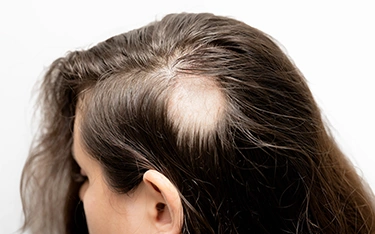
Identifying whether the scalp is predominantly dry, oily, irritated or affected by another condition helps guide more appropriate dandruff treatment. Sudden patches or rapidly progressing thinning? Meet a Senior Consultant at Dr Batra's UAE for a professional assessment.
Dandruff vs Dry Scalp vs Scalp Psoriasis: How to Tell the Difference
Dandruff, dry scalp and scalp psoriasis can all produce flakes, but they are not the same.
| Condition | Typical Appearance | Other Signs |
|---|
| Dandruff | White or yellowish flakes | Itching, oiliness or mild irritation |
| Dry scalp | Smaller, dry flakes | Tight or dry-feeling scalp |
| Scalp psoriasis | Thicker, more defined scaling | Redness, plaques and persistent inflammation |
Dry scalp is primarily associated with reduced moisture, while dandruff may occur on either an oily or dry-looking scalp.
Scalp psoriasis is an inflammatory condition that can create more noticeable plaques and scaling. Symptoms may extend around the hairline or behind the ears.
Because these conditions can resemble one another, persistent or thick scaling deserves proper evaluation. Dr Batra's UAE provides dedicated assessment and information for people experiencing symptoms associated with scalp psoriasis.
Why Does Dandruff Keep Coming Back?
Even after the visible flakes reduce, the scalp may remain prone to oil imbalance, irritation or barrier disruption. This is why dandruff can return.
Factors such as scalp oiliness, sensitivity, Malassezia and skin-barrier imbalance may remain even when the scalp looks clear. Mayo Clinic notes that dandruff can be controlled, but symptoms may return later.
For recurring symptoms, consistent scalp care and identifying individual triggers can be more useful than repeatedly focusing only on removing flakes.
Can Dandruff Cause Hair Fall?
Dandruff does not automatically mean permanent hair loss. However, persistent itching and scratching can irritate the scalp and contribute to hair breakage or increased shedding.
Inflammation associated with some scalp conditions may also occur alongside hair fall.
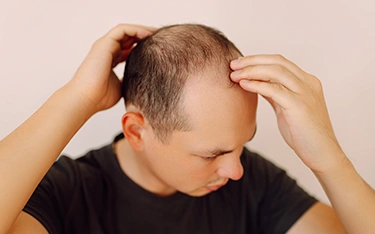
If shedding remains noticeable after dandruff improves, the hair loss should be evaluated separately rather than assuming dandruff is the only cause. Stress, nutritional factors, hormonal changes, genetics and other scalp concerns may also contribute.
For people experiencing both scalp flaking and persistent shedding, Dr Batra's UAE offers personalised hair fall treatment, allowing the scalp and hair concerns to be assessed together.
When to See a Doctor: Signs Flaking Signals Something More Serious
Professional assessment is advisable when symptoms become persistent, uncomfortable or difficult to control.
Thick plaques, marked redness, pain, crusting, bleeding or significant hair shedding can indicate that something other than routine dandruff may be affecting the scalp.
Consider a consultation when dandruff keeps returning, does not improve with appropriate scalp care, or is accompanied by persistent itching, redness, thick scaling or noticeable hair shedding. The American Academy of Dermatology and Mayo Clinic both recommend professional evaluation when dandruff remains difficult to control. Get ahead of the problem. Book a consultation with a senior doctor at Dr Batra's.
Homeopathic Dandruff Treatment at Dr Batra's UAE
At Dr Batra's UAE, dandruff treatment is personalised to each patient using homeopathy, AI-powered hair and scalp analysis, and a detailed 30–40 minute consultation. The approach focuses not only on relieving itching and flaking, but also on addressing underlying physical, emotional and lifestyle factors that may contribute to recurrence. Based on the assessment, doctors recommend an individualised homeopathic treatment plan along with diet and lifestyle guidance to support long-term scalp health. For patients experiencing hair fall as well, advanced hair treatments can be combined with homeopathy to manage hair loss while supporting overall internal health.
Advance Hair Treatments that help reduce hairfall
HairGain:
Dr Batra's® HairGain is an advanced hair regrowth treatment powered , a potent formula with copper tripeptide, growth factors, polypeptides, and essential amino acids. Newly launched in the UAE, HairGain penetrates up to the 3rd layer of the scalp to regenerate damaged follicles, delay follicle ageing, and nourish hair from the root
GroHair:
Hair thinning and hair fall occur due to weak follicles, poor scalp circulation, and nutritional imbalance. At Dr Batra's®, groHair treatment addresses these root causes using advanced, non-surgical technology, helping strengthen follicles, improve scalp circulation, and support natural hair regrowth over time.
Oxy HVT:
Next Gen medically approved treatment to reduce hair loss and increase terminal hair density in both males and females in just 10 weeks.
Home Remedies for Dandruff: What May Help?
Tea Tree Oil
Tea tree oil is one of the natural ingredients that has been studied for dandruff.
However, this does not mean concentrated essential oil should be applied directly to the scalp. Essential oils may cause irritation or allergic reactions in sensitive individuals.
Moisturising the Scalp
Moisturising care may help when the scalp is genuinely dry.
However, heavy oiling may not be suitable for people who already have an oily or irritated scalp.
Lemon Juice and Apple Cider Vinegar
Lemon juice and apple cider vinegar are popular home remedies, but evidence supporting their use for dandruff is limited.
Both can also irritate sensitive or inflamed skin.
If home remedies repeatedly fail to control dandruff, continuing to experiment with different ingredients may be less useful than identifying what is actually affecting the scalp.
For recurring dandruff, consider a detailed consultation with a Senior Doctor at Dr Batra's.
How to Get Rid of Dandruff
People often search for a single product or remedy that will remove dandruff permanently. In reality, dandruff usually needs ongoing management, particularly when there is a tendency for symptoms to return.
At Dr Batra's UAE, dandruff management is personalised after assessing the scalp, symptoms and associated hair concerns.
The objective is not simply to remove visible flakes, but to better understand the pattern behind recurrent dandruff and build an appropriate long-term scalp-care approach.
Book a consultation with a Senior Doctor at Dr Batra’s UAE or begin with an AI Scalp Evaluation to better understand your scalp condition.






 Call Now