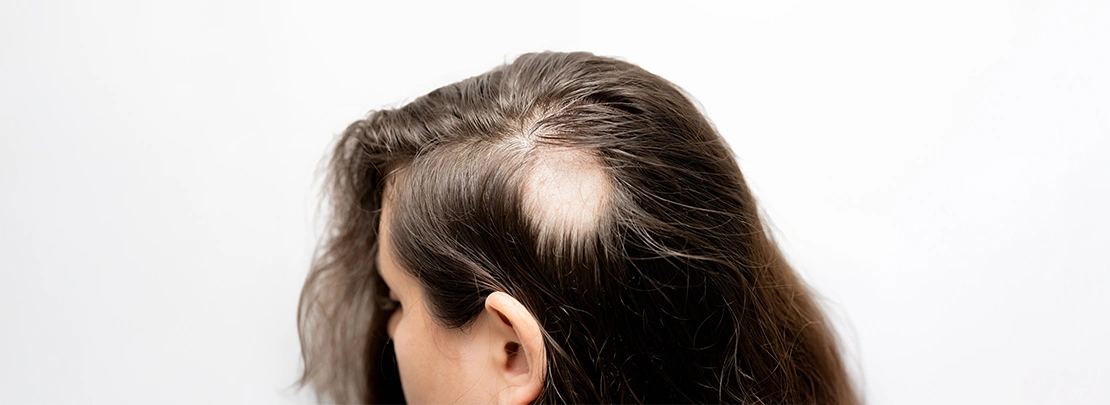
Alopecia areata is an autoimmune hair-loss condition that can cause sudden, smooth patches of missing hair on the scalp, beard, eyebrows or other parts of the body. Unlike ordinary hair shedding, it occurs when the immune system mistakenly targets healthy hair follicles and interrupts their normal growth cycle.
The condition can behave differently from one person to another. Some people notice one small patch, while others experience repeated or more extensive hair loss. Because the follicles are usually not permanently destroyed, regrowth can occur, although the course of alopecia areata is unpredictable.
For anyone experiencing sudden patchy hair loss, early assessment is important. At Dr Batra's UAE, the focus is on understanding the type, extent, progression and possible contributing factors before creating a personalised alopecia management plan.
What Is Alopecia and How Alopecia Areata Differs From Other Hair Loss
If you are asking what is alopecia, "alopecia" simply means hair loss. It is an umbrella term that includes several conditions with very different causes and patterns.
Alopecia areata is different from common hereditary thinning because it is an autoimmune condition. It typically causes clearly defined patches of hair loss rather than the gradual reduction in density seen in pattern hair loss.
Other forms of hair loss may be associated with:
- genetics;
- hormonal changes;
- illness or physical stress;
- nutritional factors;
- repeated pulling or tight hairstyles;
- inflammation or damage to the follicles.
Cleveland Clinic describes alopecia areata as a condition that may affect the scalp, eyebrows, eyelashes, facial hair and body hair. It is not contagious.
Correctly identifying the pattern matters because different forms of hair loss require different management approaches.
Alopecia Symptoms and Early Signs on Scalp, Beard, Brows and Nails
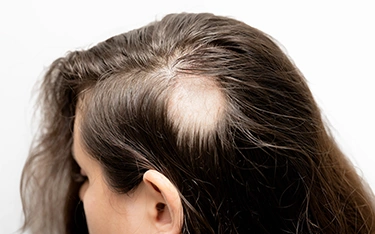
The most recognisable alopecia symptoms are smooth, round or oval patches of sudden hair loss.
Early signs can include:
- one or more clearly defined bald patches;
- sudden gaps within the beard;
- thinning or loss of eyebrow hair;
- eyelash loss;
- short or broken hairs around the edge of a patch;
- small dark dots where hairs have broken close to the scalp;
- fine or lighter-coloured hair appearing during early regrowth.
The scalp usually looks relatively normal rather than scarred.
Alopecia areata can also affect the nails. Some people develop small pits, roughness or changes in nail texture.
Sudden patchy hair loss should not be ignored. Other scalp conditions can occasionally create similar-looking areas, so correct diagnosis is important before deciding on treatment.incase you Recognise any of these signs? Take an AI Scalp Evaluation at Dr Batra's to check your scalp in minutes.
Alopecia Areata Causes: The Autoimmune Mechanism Explained
The central mechanism behind alopecia areata causes is an abnormal immune response involving the hair follicle.
Hair follicles normally have a degree of protection from immune-system activity. In alopecia areata, this protection becomes disrupted, allowing immune cells to target follicles that would otherwise continue producing hair.
A major scientific review described alopecia areata as a multifactorial autoimmune condition, with immune activity around the hair follicle playing a central role in the development of hair loss.
Importantly, this process usually does not permanently destroy the follicle. Instead, normal growth is interrupted, which is why hair may sometimes regrow.
Reasons for Alopecia Areata: Triggers, Genetics and Linked Conditions
There is rarely one simple explanation for the causes of alopecia areata.
Genetic susceptibility appears to be important. People with a family history of alopecia areata or certain autoimmune conditions may have a greater predisposition, although having a family history does not mean someone will definitely develop the condition.
Other factors associated with alopecia areata include:
- immune-system dysregulation;
- genetic susceptibility;
- significant physical or emotional stress in some individuals;
- association with other autoimmune conditions;
- environmental influences that may contribute in susceptible people.
Stress is often blamed for alopecia, but it is more accurate to describe it as a possible trigger or aggravating factor rather than the sole cause.
This is why a detailed consultation matters. Understanding when hair loss began, how quickly it is progressing and what else was happening around the time of onset can provide useful clinical context.
Alopecia Types: Alopecia Areata Patterns and Other Common Forms
Alopecia is an umbrella term, and different alopecia types describe different patterns and causes of hair loss, including the patterns seen in alopecia areata.
| Type | Typical Pattern |
|---|
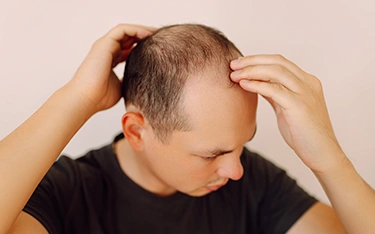
| Androgenetic alopecia | Gradual, patterned hair thinning. It commonly causes a receding hairline or thinning at the crown in men and widening of the part or thinning over the top of the scalp in women. |
| Patchy alopecia areata | One or several round or oval, smooth areas of hair loss, most often affecting the scalp or beard. |
| Alopecia totalis | Complete or almost complete loss of hair from the scalp. |
| Alopecia universalis | Extensive loss of hair from the scalp and body. |
| Ophiasis alopecia | Band-like hair loss around the sides and back of the scalp. |
| Diffuse alopecia areata | Widespread hair thinning or shedding rather than clearly defined bald patches. |
| Alopecia barbae | Alopecia areata that primarily causes patchy hair loss in the beard area. |
| Traction alopecia | Hair loss caused by repeated tension or pulling on the hair, often affecting the hairline and areas under persistent tension. |
| Cicatricial alopecia (scarring alopecia) | Hair loss caused by inflammation or damage that destroys hair follicles and replaces them with scar tissue. |
| Central centrifugal cicatricial alopecia (CCCA) | Scarring hair loss that typically begins around the centre or crown of the scalp and gradually spreads outward. |
| Frontal fibrosing alopecia | Scarring hair loss that commonly causes a progressively receding frontal hairline and may also affect the eyebrows. |
| Lichen planopilaris | An inflammatory form of scarring alopecia that can cause irregular patches of permanent hair loss. |
| Telogen effluvium | Diffuse shedding across the scalp, often occurring after physical or emotional stress, illness, hormonal changes or other triggers. |
| Anagen effluvium | Rapid, widespread hair loss caused by interruption of the active hair-growth phase, commonly associated with chemotherapy and certain other treatments or exposures. |
| Trichotillomania | Irregular areas of hair loss caused by repeated pulling or twisting of the hair. |
The pattern of hair loss can provide important clues, but appearance alone does not always identify the underlying type of alopecia. Some forms are temporary or potentially reversible, while scarring alopecias can permanently damage hair follicles.
Identifying the type of alopecia helps doctors determine the likely cause, assess severity and progression, and recommend the most appropriate treatment.
How Alopecia Areata Is Diagnosed
Diagnosis usually begins with a detailed examination of the hair and scalp.
A doctor may assess:
- the shape and distribution of hair-loss patches;
- hairs around the borders of affected areas;
- scalp and follicle appearance;
- eyebrows, beard or other affected areas;
- nail changes;
- personal and family history;
- previous episodes of hair loss and regrowth.
Additional investigations may sometimes be recommended when another medical or scalp condition needs to be excluded.
At Dr Batra's UAE, detailed scalp and hair assessment forms an important part of the consultation. Technology-assisted analysis may also be used where appropriate to help understand the condition of the scalp and follicles and monitor changes over time . To Start with a proper assessment. Take an AI Scalp Evaluation at Dr Batra's or Meet a Senior Doctor at Dr Batra's.
Will My Hair Grow Back? Regrowth Outlook by Type and Extent
One of the biggest concerns after an alopecia diagnosis is whether the hair will grow back.
Because alopecia areata is usually a non-scarring form of hair loss, follicles often remain capable of producing hair. Regrowth can therefore occur, particularly when the affected area is limited.
However, it is not possible to predict exactly how quickly or completely hair will return for every person.
Some people experience:
- spontaneous regrowth;
- repeated cycles of loss and regrowth;
- new patches appearing while older ones improve;
- more extensive or persistent hair loss.
Early regrowth may initially appear finer, lighter or different in texture.
The extent of hair loss, duration of the condition and individual clinical pattern all influence the outlook. A personalised assessment is therefore more useful than relying on general regrowth timelines
How to Stop Alopecia Areata From Spreading
There is no reliable home method that can instantly stop alopecia areata from spreading.
However, early assessment can help establish whether the condition is active and how quickly it is progressing.
Helpful steps include:
- avoid repeatedly pulling or testing hairs around the patches;
- use gentle hair and scalp care;
- minimise unnecessary heat and chemical damage;
- maintain a balanced diet;
- address confirmed nutritional deficiencies when relevant;
- manage prolonged stress;
- monitor whether existing patches enlarge or new ones appear.
Oils, shampoos or cosmetic remedies alone cannot address every factor involved in an autoimmune hair-loss condition.
When to See a Doctor for Alopecia Areata
Sudden patchy hair loss should not be ignored. If new patches continue to appear, the more useful step is to have the condition evaluated and monitored professionally.
Waiting without assessment may be less appropriate if patches are increasing, recurring, affecting the beard or eyebrows, or becoming more extensive.
For anyone noticing sudden round bald patches, recurrent patchy hair loss or unexplained beard or eyebrow loss, early consultation can help establish the diagnosis and determine the most suitable next steps.Don't wait for it to spread. Meet a Senior Doctor at Dr Batra's.
Alopecia Areata Treatment Options Compared
Alopecia areata treatment should be selected according to the extent of hair loss, progression, age, individual health profile and previous history.
Broad approaches may include:
| Approach | Role |
|---|
| Conventional medical care | Focuses on controlling abnormal immune activity and supporting regrowth |
| Personalised homeopathic care | Takes the individual's overall symptoms, health profile and alopecia pattern into account |
| Supportive scalp and hair therapies | May complement the core management plan where appropriate |
| Lifestyle and nutritional guidance | Supports general wellbeing and addresses relevant contributing factors |
| Cosmetic support | Helps manage appearance while hair loss or regrowth is being monitored |
No approach can guarantee permanent regrowth in every case because alopecia areata can be unpredictable.
The key is choosing an approach based on the individual rather than the patch alone.
Living With Alopecia Areata: Managing the Emotional Impact
Alopecia areata can have a significant emotional impact because the hair loss may appear suddenly and can be difficult to predict.
A systematic review and meta-analysis involving thousands of people with alopecia areata found a higher association with anxiety and depression compared with control populations. Read the systematic review on alopecia areata and emotional wellbeing.
People may experience:
- reduced confidence;
- anxiety about additional patches;
- frustration during repeated loss and regrowth;
- discomfort with changes in appearance;
- avoidance of social situations.
These concerns are valid and should be considered as part of overall care.
Support from family, the treating doctor or a mental-health professional can be valuable when alopecia begins affecting confidence, relationships or day-to-day wellbeing.
Alopecia Areata Treatment at Dr Batra's UAE
At Dr Batra's UAE, alopecia areata treatment is built around a personalised understanding of the patient, not a one-size-fits-all hair-loss protocol.
The consultation may consider:
- when the first patch appeared;
- how quickly hair loss is progressing;
- number and location of affected areas;
- previous episodes and regrowth;
- scalp and follicle health;
- family history;
- stress and lifestyle factors;
- nutritional and medical history;
- associated hair or scalp concerns.
This comprehensive assessment is especially important in alopecia areata because a single recent patch can behave very differently from long-standing, recurrent or extensive hair loss.
Dr Batra's UAE combines personalised homeopathic care with detailed hair and scalp assessment, supported by advanced diagnostic technology where appropriate. Lifestyle and hair-care guidance can also form part of the overall treatment plan.
The focus is not simply on covering the visible patch. It is on understanding the individual's alopecia pattern, monitoring its progression and creating a structured, personalised approach to managing the condition.
With more than four decades of experience in hair and homeopathic care globally, Dr Batra's brings extensive expertise to patients seeking alopecia care in Dubai and Abu Dhabi.
Explore Dr Batra's personalised alopecia treatment in Dubai and Abu Dhabi.
Meet a Senior Consultant at Dr Batra's UAE to identify the cause of your Alopecia and build a personalised treatment plan






 Call Now