Scalp psoriasis is not a condition defined by a single episode. It is a chronic, relapsing disorder, and for most individuals, the real struggle begins not at diagnosis—but in managing the cycle of recurrence.
Patients often describe the same frustrating pattern:
- There is a flare-up.
- Treatment is started.
- Symptoms begin to settle.
- The scalp feels calmer.
And just when it feels manageable, the condition returns.
Sometimes subtly, sometimes aggressively—but almost always unexpectedly.
This repetitive cycle creates confusion and fatigue. Many begin to question whether the condition can ever truly be controlled.
From a clinical and homeopathic standpoint, the answer is yes—but only when the condition is understood correctly.
The key insight is this:
Scalp psoriasis does not return because treatment failed. It returns because the underlying imbalance was never fully addressed.
This distinction is critical.
Psoriasis is not just a disorder of the skin. It is an immune-mediated inflammatory condition, influenced by:
- Internal immune dysregulation
- Emotional and psychological stress
- Environmental exposure
- Lifestyle and metabolic patterns
When treatment focuses only on the surface, symptoms improve temporarily. But when the internal drivers remain active, flare-ups continue.
Understanding Scalp Psoriasis – A Deeper Clinical Perspective
To understand recurrence, we must first understand the biology behind psoriasis.
The skin, under normal conditions, follows a controlled cycle of renewal. Cells are produced in deeper layers and gradually move to the surface over several weeks before shedding.
In scalp psoriasis, this process is dramatically accelerated.
The immune system, instead of maintaining balance, becomes overactive and misdirected. It sends signals that cause skin cells to multiply rapidly—sometimes within just a few days.
This results in:
- Accumulation of immature skin cells
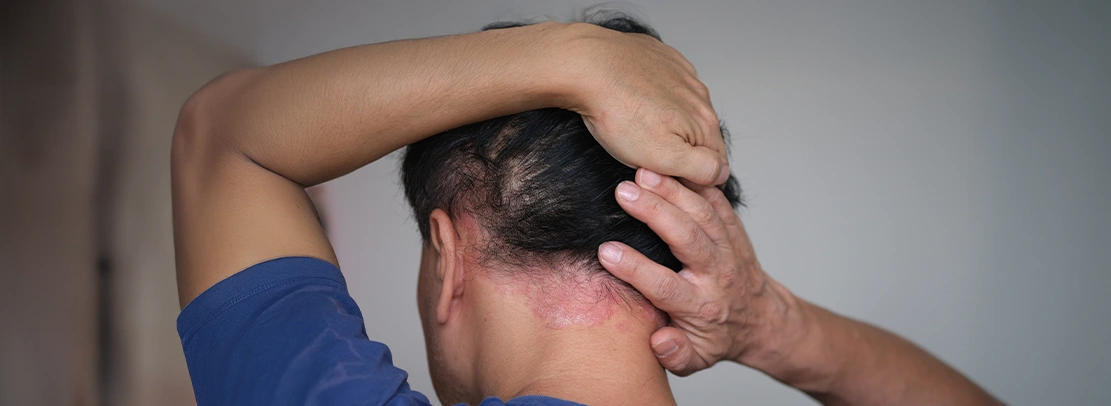
- Thickened plaques on the scalp
- Silvery or white scaling
- Redness and inflammation
Unlike conditions such as dandruff, which are largely superficial, psoriasis is driven by systemic immune dysfunction.
This is why:
- It tends to recur
- It responds inconsistently to surface treatments
- It behaves unpredictably over time
Why Scalp Psoriasis Flare-Ups Keep Coming Back
The recurrence of scalp psoriasis is not random. It follows a structured pattern driven by three interconnected mechanisms:
1. Persistent Immune Dysregulation
Even when visible symptoms improve, the immune system may remain in a heightened state of activity.
This means:
- Inflammatory pathways are still active
- Skin cell turnover remains accelerated internally
- The condition is temporarily suppressed, not resolved
As soon as external treatment is reduced or stopped, the underlying activity manifests again.
2. Continuous Exposure to Triggers
Psoriasis is highly sensitive to triggers, and in modern environments, these triggers are rarely isolated events. They are ongoing.
This creates a situation where:
- The body is repeatedly stimulated
- The immune system remains reactive
- Flare-ups are easily reactivated
3. Symptom-Based Treatment Approaches
Many treatment strategies focus on:
- Reducing scaling
- Controlling itching
- Improving appearance
While these are important, they do not address:
- Immune imbalance
- Stress-related triggers
- Internal inflammation
This leads to the familiar cycle:
Relief → Stability → Recurrence
Trigger Mapping – Identifying the Real Causes of Flare-Ups
Breaking the cycle requires identifying what is triggering it.
Stress – The Most Powerful Internal Trigger
Among all triggers, stress stands out as the most consistent and clinically significant.
Stress affects the body through multiple pathways:
- It increases cortisol levels
- It activates inflammatory responses
- It disrupts hormonal balance
- It weakens immune regulation
In patients with psoriasis, this translates to:
- Increased sensitivity of the skin
- Faster onset of flare-ups
- More severe symptoms
It is not uncommon for patients to report that their condition worsens during:
- High-pressure work periods
- Emotional conflicts
- Sleep disturbances
From a homeopathic perspective, psoriasis often reflects chronic internal stress that has not been fully processed or resolved.
This makes emotional health a central pillar of treatment, not a secondary factor.
Climate and Environmental Stress – A Dubai-Specific Reality
Environmental triggers play a particularly important role in regions like Dubai.
Heat and Sweating
High temperatures lead to continuous sweating, which:
- Irritates the scalp
- Alters the skin’s natural pH
- Encourages microbial imbalance
Sweat mixed with oil and dead skin creates a pro-inflammatory environment, making the scalp more reactive.
Hard Water Exposure
Dubai’s water contains significant mineral content, including calcium and magnesium.
These minerals:
- Form deposits on the scalp
- Interfere with proper cleansing
- Strip natural oils
Over time, this leads to:
- Dryness
- Irritation
- Barrier dysfunction
This weakened barrier makes the scalp more susceptible to flare-ups.
Air Conditioning
Frequent exposure to air-conditioned environments:
- Reduces moisture levels
- Dries out the scalp
- Increases sensitivity
The constant shift between outdoor heat and indoor cooling prevents the scalp from maintaining stability.
Diet and Lifestyle – The Internal Environment
The body’s internal environment plays a significant role in inflammatory conditions.
Dietary and lifestyle factors that contribute include:
- High intake of processed foods
- Excess sugar consumption
- Inadequate hydration
- Irregular sleep patterns
These factors increase systemic inflammation, which directly impacts psoriasis.
Why Steroid Treatments Provide Only Short-Term Relief
Steroid-based treatments are widely used because they offer rapid symptom relief.
They work by:
- Suppressing inflammation
- Reducing immune activity locally
- Improving visible symptoms quickly
However, their limitation lies in what they do not do.
They do not:
- Correct immune dysregulation
- Address internal triggers
- Provide long-term stability
As a result:
- Symptoms often return after discontinuation
- The condition may become dependent on repeated use
- Long-term effectiveness may decrease
This creates a pattern of temporary control without resolution.
Recognizing When Your Condition Needs a Different Approach
Certain patterns indicate that the current treatment strategy is insufficient:
- Frequent flare-ups despite treatment
- Temporary improvement followed by relapse
- Increasing severity over time
- Spread beyond the scalp
- Emotional distress related to the condition
These signs suggest that the condition requires a root-cause-oriented approach.
Homeopathic Approach – Regulating the System, Not Just the Symptoms
Homeopathy offers a fundamentally different way of understanding and treating scalp psoriasis.
Instead of viewing the condition as a localized skin issue, it considers it an expression of systemic imbalance.
Treatment focuses on:
- Restoring immune balance
- Reducing inflammatory tendencies
- Addressing emotional and lifestyle factors
At Dr. Batra’s Homeopathy Clinic, treatment is individualized, meaning:
No two patients receive identical treatment.
How Homeopathy Works in Scalp Psoriasis
Homeopathy works by stimulating the body’s natural ability to regulate itself.
It helps:
- Normalize immune response
- Reduce frequency of flare-ups
- Improve skin resilience
- Support long-term healing
Long-Term Remission vs Temporary Suppression
This is where the distinction becomes important.
Conventional treatments often aim for control.
Homeopathy aims for correction.
Over time, patients may experience:
- Longer periods without flare-ups
- Reduced intensity of symptoms
- Improved overall health
Natural Strategies to Support Treatment
A holistic approach includes both internal treatment and supportive lifestyle practices.
Scalp Care
- Use gentle, non-irritating products
- Avoid excessive chemical exposure
- Maintain cleanliness without over-washing
Hydration and Barrier Support
- Keep the scalp balanced
- Avoid both excessive dryness and oiliness
Stress Management
- Regular relaxation practices
- Adequate sleep
- Physical activity
Dietary Balance
- Focus on anti-inflammatory foods
- Maintain hydration
- Avoid triggers
Breaking the Cycle – A New Approach to Healing
Managing scalp psoriasis effectively requires a shift in approach.
Instead of asking:
“How do I remove the symptoms?”
The question becomes:
“How do I prevent them from returning?”
This shift leads to:
- Better understanding of triggers
- More sustainable treatment
- Long-term stability
When to Seek Professional Help
Professional consultation is essential when:
- Symptoms persist despite treatment
- There is discomfort, pain, or bleeding
- The condition spreads
- Daily life is affected
Early intervention improves long-term outcomes.
Conclusion
Scalp psoriasis flare-ups are not random. They are a reflection of internal imbalance and ongoing trigger exposure.
The cycle of recurrence continues when treatment focuses only on symptoms.
Breaking this cycle requires:
- Addressing immune dysregulation
- Identifying triggers
- Supporting overall health
A homeopathic approach offers a pathway that emphasizes:
- Root cause correction
- Natural healing
- Long-term remission
With the right strategy, it is possible to move beyond temporary relief and achieve lasting control over scalp psoriasis.
Disclaimer
The information provided in this article is for informational purposes only and does not constitute medical advice, diagnosis, or treatment. Scalp psoriasis is a chronic condition that may vary between individuals. Homeopathic treatment supports overall balance; however, results may vary. Please consult a qualified healthcare professional for accurate diagnosis and personalized care.







 Call Now