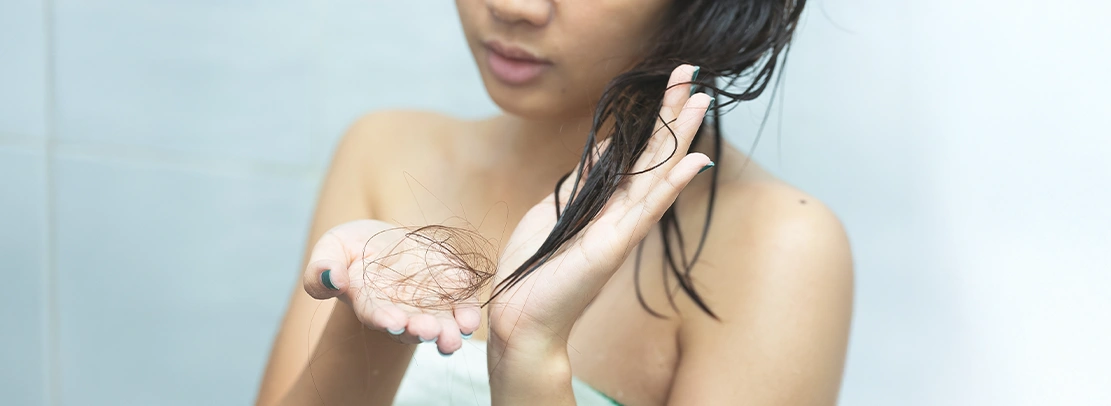
Hair fall is one of the most common yet deeply distressing concerns seen in clinical practice across the UAE. Many individuals report a similar pattern: despite using premium shampoos, oils, serums, and even medical treatments, their hair fall in Dubai does not stop. Instead, it persists, fluctuates, or worsens over time.
From a clinical homeopathic and trichological perspective, this is not a coincidence. Hair fall in regions like Dubai is rarely caused by a single factor. It is usually the result of a complex interaction between environmental stressors, internal imbalances, and lifestyle triggers.
Dubai presents a unique combination of challenges:
- Hard water with high mineral content
- Extreme heat and humidity
- Constant air-conditioned environments
- High-stress urban lifestyle
These factors collectively disrupt the hair growth cycle, weaken hair roots, and trigger excessive shedding.
Most importantly, when hair fall continues despite treatment, it is often a sign that the root cause has not been addressed.
Understanding the Hair Growth Cycle – Why Hair Fall Becomes Sudden and Excessive
To understand persistent hair fall, it is essential to first understand the hair growth cycle.
Hair grows in three phases:
- Anagen (growth phase): Active hair growth lasting several years
- Catagen (transition phase): Short phase where growth slows
- Telogen (resting/shedding phase): Hair falls and new hair begins to grow
Under normal conditions, only a small percentage of hair is in the shedding phase. However, when the body experiences stress—physical, emotional, or environmental—a large number of hair follicles prematurely enter the telogen phase.
This results in a condition known as telogen effluvium, where:
- Hair fall becomes sudden and noticeable
- Shedding increases dramatically within weeks
- Hair volume visibly reduces
This explains why many people in Dubai experience sudden hair fall rather than gradual thinning.
The Real Reasons Your Hair Fall Is Not Stopping in Dubai
When patients say their hair fall is not stopping, it is rarely due to ineffective products alone. It is usually due to persistent underlying triggers.
1. Stress – The Most Overlooked Cause of Hair Fall
In a fast-paced city like Dubai, stress is often normalized. However, its impact on hair health is profound.
Stress affects hair by:
- Disrupting hormonal balance
- Increasing cortisol levels
- Reducing nutrient supply to hair follicles
This leads to:
- Premature entry of hair into the shedding phase
- Weakening of hair roots
- Slower regrowth
Clinically, we often observe that patients experiencing:
- Work pressure
- Emotional strain
- Sleep disturbances
report continuous hair fall despite external treatments.
From a homeopathic perspective, emotional health is deeply linked to physical expression, and hair fall is often an external sign of internal stress imbalance.
2. Hard Water in Dubai – The Invisible Hair Damage
One of the most underestimated contributors to hair fall in Dubai is hard water.
Dubai’s water supply contains high levels of:
- Calcium
- Magnesium
- Mineral salts
These minerals accumulate on the scalp and hair, leading to:
- Blocked hair follicles
- Dry, rough hair texture
- Reduced effectiveness of shampoos
Over time, this results in:
- Weak hair roots
- Increased breakage
- Persistent hair shedding
Patients often notice that:
- Hair feels dry even after conditioning
- Scalp feels coated or itchy
- Hair fall increases after washing
This is a classic sign of hard water-induced hair damage.
3. Hormonal Imbalance – The Internal Trigger You Can’t See
Hormones play a critical role in regulating the hair growth cycle.
Even subtle imbalances in:
- Thyroid function
- Estrogen and progesterone
- Androgen levels
can lead to:
- Excessive hair shedding
- Thinning hair
- Delayed regrowth
In women, hair fall is commonly linked to:
- PCOS
- Post-pregnancy changes
- Weight fluctuations
In both men and women, hormonal imbalance can silently disrupt the natural rhythm of hair growth, making hair fall persistent and resistant to topical treatment.
4. Climate Stress – Heat, Sweat, and AC Damage
Dubai’s climate creates a constant stress cycle for the scalp.
- Outdoor heat → sweating and scalp irritation
- Indoor AC → dryness and moisture loss
This repeated transition leads to:
- Scalp sensitivity
- Weakening of hair roots
- Increased shedding
Sweat also mixes with oil and dirt, creating conditions that:
- Irritate hair follicles
- Disrupt scalp balance
This is why many people experience worsening hair fall during summer months or after outdoor exposure.
Why Oils, Shampoos, and Serums Alone Don’t Work
A common misconception is that hair fall can be controlled entirely through external products.
While these products may:
- Improve hair texture
- Reduce dryness
- Provide temporary strength
they do not address:
- Internal stress
- Hormonal imbalance
- Immune system disruption
This is why results are often:
- Temporary
- Inconsistent
- Unsatisfactory
True hair recovery requires addressing both:
- External scalp care
- Internal physiological balance
Homeopathic Approach – Treating Hair Fall from the Root
From a clinical standpoint, homeopathy offers a fundamentally different approach to treating hair fall.
Instead of focusing only on symptoms, homeopathy works to:
- Identify the root cause of hair fall
- Restore internal balance
- Strengthen the body’s natural healing response
At Dr. Batra’s Homeopathy Clinic, treatment is individualized, meaning no two patients receive the same prescription.
How Homeopathy Helps in Persistent Hair Fall
Homeopathic treatment works by:
- Regulating the hair growth cycle
- Reducing stress-induced hair fall
- Supporting hormonal balance
- Improving scalp health naturally
Unlike conventional treatments, it:
- Does not suppress symptoms
- Has no side effects
- Is safe for long-term use
Most importantly, it aims to prevent recurrence, not just provide temporary relief.
Natural Supportive Remedies for Hair Health
Alongside homeopathic treatment, certain natural practices can support recovery:
- Coconut oil massage to improve scalp hydration
- Aloe vera to soothe irritation
- Gentle, sulphate-free shampoos
- Avoiding excessive heat styling
However, these should be seen as supportive measures, not standalone solutions for chronic hair fall.
Daily Hair Care Routine for Dubai Conditions
A structured routine is essential to minimize environmental damage.
Use Filtered Water for Hair Wash
Installing a shower filter can:
- Reduce mineral exposure
- Improve scalp health
- Enhance effectiveness of hair products
Wash Hair Based on Sweat Exposure
- Frequent sweating → more regular washing
- Avoid long gaps between washes
Keep the Scalp Hydrated, Not Oily
Balance is key:
- Over-oiling can clog pores
- Under-hydration leads to dryness
Manage Stress Actively
- Meditation
- Exercise
- Adequate sleep
These significantly improve hair health over time.
When Should You Seek Professional Help?
Hair fall should not be ignored when:
- It continues beyond 2–3 months
- Hair volume visibly reduces
- Scalp becomes sensitive or itchy
- There is no improvement despite product use
Early intervention prevents progression and supports faster recovery.
Conclusion
If your hair fall is not stopping in Dubai, it is not simply a cosmetic issue—it is a signal from your body.
The combination of:
- Stress
- Hard water
- Hormonal imbalance
- Environmental exposure
creates a complex condition that cannot be resolved through surface-level treatment alone.
A holistic, root-cause approach, particularly through homeopathy, offers:
- Long-term relief
- Improved hair strength
- Reduced recurrence
By addressing both internal and external factors, it is possible to restore not just your hair, but your overall balance and well-being.
Disclaimer:
The information provided on this page is for general informational purposes only and is not intended as medical advice, diagnosis, or treatment. Homeopathic treatments and outcomes may vary between individuals and are not guaranteed. This content does not replace consultation with a licensed medical practitioner. Always seek professional medical advice before starting any treatment. If you have a medical condition or are experiencing persistent symptoms, consult a qualified healthcare provider immediately.






 Call Now