Endometriosis is a chronic condition in which tissue similar to the lining of the uterus grows outside the uterus, leading to inflammation that can cause severe period pain, pelvic pain and, in some women, fertility problems.
Diagnosis often takes years because severe menstrual pain is frequently accepted as “normal”, symptoms may resemble digestive or urinary problems, and even a normal ultrasound cannot always rule endometriosis out.
If your periods regularly leave you unable to work, sleep, exercise or go about your day normally, the pain deserves attention.
Early recognition, appropriate gynaecological evaluation and personalised supportive care can make that journey much clearer.
What Is Endometriosis?
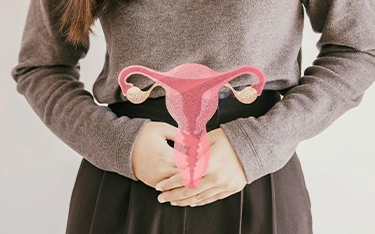
What is endometriosis? It is a chronic inflammatory condition in which tissue similar to the endometrium — the lining inside the uterus — develops elsewhere in the body.
It most commonly occurs within the pelvis and may involve the ovaries, pelvic lining and surrounding tissues. In deeper forms, it can involve structures around the bowel, bladder or ureters.
The World Health Organization estimates that endometriosis affects approximately 10% of women of reproductive age worldwide, or around 190 million women.
But endometriosis does not look the same in every woman.
One woman may have disabling period pain. Another may mainly experience bloating, bowel discomfort or pain during intercourse. Someone else may discover the condition while investigating difficulty conceiving.
The aim is to understand how the condition is affecting you as an individual.
What Are the Stages of Endometriosis?
Endometriosis is commonly divided into four stages:
- Stage I – Minimal
- Stage II – Mild
- Stage III – Moderate
- Stage IV – Severe
The classification considers factors such as the number, depth and location of lesions, ovarian involvement and adhesions.
However, the stage does not reliably predict how much pain a woman will experience.
A woman with Stage I disease can experience severe endometriosis period pain, while someone with Stage IV disease may experience less pain.
Current NICE guidance therefore recommends basing treatment decisions on symptoms, priorities and individual needs rather than the stage alone.
Two women with the same stage of endometriosis may therefore require very different supportive care.
What Are the Types of Endometriosis?
Endometriosis can also be classified according to where it occurs.
- Superficial peritoneal endometriosis affects the surface lining of the pelvis.
- Ovarian endometrioma occurs when endometriosis forms a cyst within an ovary.
- Deep endometriosis extends deeper into pelvic tissues and may involve areas around the bowel, bladder, ureters or tissue behind the uterus.
A woman can have more than one form at the same time.
Knowing the location matters because ovarian endometriomas and deep endometriosis may require specialist imaging or gynaecological treatment. Book your consultation today to understand your condition and explore personalised treatment options with our Senior Doctors
What Causes Endometriosis?
The exact endometriosis causes are still not completely understood.
Current research suggests that a combination of factors may contribute, including:
- genetic susceptibility
- immune and inflammatory mechanisms
- hormonal influences
- cellular processes
- family history
WHO confirms that the precise cause remains unknown.
Family history is important. Women with a first-degree relative who has endometriosis have a higher likelihood of developing the condition.
Endometriosis is not caused by poor hygiene, sexual activity or a woman being unable to tolerate normal menstrual pain.
Stress does not cause endometriosis either, but chronic pain and stress can affect one another. Poor sleep, fatigue, anxiety around the next period and the emotional burden of recurring pain can make the overall experience considerably harder.
What Are the Common Endometriosis Symptoms?
Common endometriosis symptoms include:
- severe or worsening period pain
- chronic pelvic pain
- pain before or after menstruation
- pain during or after intercourse
- painful bowel movements, especially during periods
- pain while urinating around menstruation
- heavy menstrual bleeding
- bloating or nausea
- fatigue
- difficulty becoming pregnant
One of the challenges with endometriosis is that these symptoms may initially seem unrelated.
A woman may seek help for constipation or bowel pain, then for urinary discomfort, then for severe periods, without anyone seeing the complete pattern.
Normal Period Pain or Endometriosis: How to Tell the Difference
Some cramping during menstruation is common. Pain that repeatedly controls your life is different.
Endometriosis should be considered when period pain:
- regularly causes you to miss work, university or school
- stops you exercising or carrying out normal activities
- wakes you from sleep
- becomes progressively worse
- begins before the period and continues for several days
- causes pain during intercourse
- is associated with painful bowel movements or urination
- occurs between periods as persistent pelvic pain
- occurs alongside fertility problems
A useful question is:
How much of my life am I changing because of my period?
If every month means cancelling plans, taking repeated pain relief, avoiding travel or preparing for several days of severe discomfort, it is worth discussing.
NICE recommends keeping a pain and symptom diary when endometriosis is suspected.
At Dr Batra's UAE, that information can also be valuable during follow-up. Because homeopathic care is individualised, tracking changes in menstrual pain, bowel symptoms, sleep, fatigue and overall wellbeing helps our doctors understand how the patient is progressing from one cycle to the next.
Don't Let Period Pain Hold You Back. Severe period pain deserves attention, not acceptance. If menstrual cramps are affecting your daily routine, speak to a healthcare professional and understand your next steps. Book a consultation with Dr Batra's UAE today.
How Is Endometriosis Diagnosed?
Endometriosis cannot be confirmed by one simple blood test.
Diagnosis usually begins with detailed symptom history and clinical evaluation.
Current NICE guidance recommends transvaginal ultrasound in women with suspected endometriosis, including when pelvic examination is normal.
Ultrasound can help identify:
- ovarian endometriomas
- some forms of deep endometriosis
- involvement of areas such as the bowel or bladder
- other possible causes of pelvic pain
However:
A normal ultrasound does not rule out endometriosis.
Superficial disease can be missed on imaging, and NICE specifically advises clinicians not to exclude the diagnosis simply because examination or ultrasound findings are normal.
Specialist ultrasound or MRI may be required when deep disease is suspected. Laparoscopy can also be considered in selected cases.
ACOG's 2026 guidance supports earlier clinical diagnosis based on symptoms, examination and appropriate imaging rather than requiring every woman to undergo surgery before treatment discussions can begin.
Your Health Deserves Personalised Attention. Every woman's experience with pelvic pain and menstrual symptoms is different. Get the right medical guidance and explore personalised supportive care tailored to your individual needs.
Connect with Dr Batra's UAE to take the next step towards better wellbeing.
How Can Homeopathy Help with Endometriosis?
At Dr Batra's UAE, homeopathy is not based on giving every woman with endometriosis the same treatment.
It is personalised.The diagnosis may be identical, but the way the condition affects each woman can be very different.
For example, one woman may experience intense cramping just before menstruation together with bloating and bowel discomfort. Another may experience pelvic pain throughout the month, painful intercourse, disturbed sleep and severe fatigue.
During the first consultation, our doctors may spend 20–45 minutes understanding the main problem and the broader health history.
They review:
- menstrual history
- character and timing of pain
- pelvic symptoms between periods
- digestive symptoms
- urinary symptoms
- sleep
- energy levels
- stress
- emotional wellbeing
- previous illnesses
- family history
- previous treatment and its outcome
- available scans and investigations
A further detailed homeopathic assessment may explore the unique characteristics of the patient's complaints, lifestyle, temperament and individual responses.
This depth of consultation is important because homeopathy at Dr Batra's is designed around the person rather than simply the disease name.
Once the case has been assessed, the doctor develops an individualised homeopathic treatment plan and provides relevant self-care and lifestyle guidance.
Follow-up is equally important. Dr Batra's typically schedules ongoing consultations, often monthly depending on the condition and treatment needs.
The treatment plan can then be reviewed accordingly.
At Dr Batra's UAE, we therefore take homeopathy as an individualised treatment approach to support symptom management and overall wellbeing, while recognising the importance of gynaecological care where required.
Personalised homeopathic support for endometriosis-related pain and associated symptoms starts with understanding your individual case. Book your consultation with Dr Batra's® UAE today and get a personalized treatment plan!
When Should You See a Doctor?
Seek medical advice if:
- period pain repeatedly interferes with daily life
- symptoms are becoming more severe
- pelvic pain occurs outside menstruation
- intercourse is painful
- bowel movements or urination become painful during your period
- bleeding is unusually heavy
- you are experiencing difficulty conceiving
- symptoms persist despite previous treatment
NICE recommends referral for further gynaecological assessment when symptoms persist, recur or significantly affect daily life.
Deep endometriosis, ovarian endometriomas or disease affecting the bowel, bladder or ureters require appropriate specialist evaluation.
Medical disclaimer: This article is intended for general educational information. Endometriosis requires appropriate medical evaluation. Homeopathic care can be used as part of an individualised supportive treatment plan and should not replace investigations or specialist gynaecological treatment when these are clinically required.






 Call Now