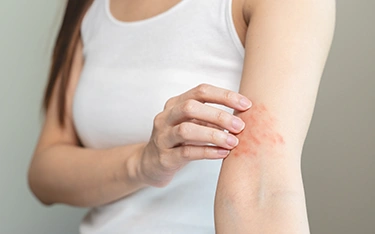
An itchy red patch after trying a new skincare product, raised welts that appear suddenly, or recurring dry and inflamed skin can all be described as a skin allergy. But these reactions are not necessarily the same condition, and they do not always have the same trigger.
Some rashes occur because the immune system reacts to a specific allergen. Others, such as atopic dermatitis, are chronic inflammatory skin conditions that are closely associated with allergy but are more complex than a simple allergic reaction.
Understanding the different skin allergy types is important because treatment begins with identifying what is actually causing the rash.
What Are the Different Types of Skin Allergies?
Allergic Contact Dermatitis
Allergic contact dermatitis develops when the immune system reacts to a substance that has touched the skin.
Common triggers can include:
- fragrances
- preservatives in cosmetics
- nickel in jewellery
- ingredients in skincare products
- hair dyes
- adhesives
- certain chemicals
Unlike an immediate allergic reaction, allergic contact dermatitis may take hours or even days to appear after exposure.
The allergy skin rash may cause intense itching, swelling, dryness, blistering, burning or cracked skin.
Hives or Urticaria
Hives are raised, itchy welts that can appear suddenly anywhere on the body.
Individual hives often disappear within hours, but new ones may continue appearing elsewhere.
Acute hives can sometimes be triggered by:
- foods
- insect bites or stings
- medicines
- latex
- infections
Heat, sweating, cold, pressure and stress can also trigger hives in susceptible people, meaning not every episode is caused by an external allergen.
Hives lasting or recurring for more than six weeks are classified as chronic urticaria, where an identifiable allergy is often not found.
Atopic Dermatitis or Eczema
Atopic dermatitis is a chronic inflammatory skin condition that commonly causes dry, intensely itchy and inflamed skin.
It frequently occurs in people or families with other allergic conditions such as asthma or hay fever, but eczema should not simply be described as an "allergy."
Common flare triggers can include:
- heat and sweating
- dry air
- fragrances
- irritating skincare products
- certain fabrics
- environmental allergens
- stress
Symptoms can improve and then return repeatedly over months or years.
Living with recurring eczema? Contact the expert doctors at Dr Batra's® UAE for eczema treatment.
Angioedema
Angioedema causes deeper swelling beneath the skin and may occur with hives.
It commonly affects the lips, eyelids and face.
Swelling of the tongue or throat, difficulty breathing or difficulty swallowing requires urgent medical attention, as these can be signs of a serious allergic reaction.
What Causes Skin Allergies?
The causes depend on the type of reaction.
With allergic contact dermatitis, a specific substance triggers an immune response after contacting the skin. The American Academy of Dermatology notes that thousands of substances can potentially cause contact allergy, with fragrance and nickel among common examples.
Hives may result from an allergy, infection or physical trigger such as heat, cold or pressure.
Atopic dermatitis involves a combination of skin-barrier dysfunction, immune-system activity, genetics and environmental triggers.
This is why finding a single "cause" can sometimes be difficult.
The trigger may also be something encountered regularly — a perfume, shampoo, cosmetic ingredient, jewellery item, laundry product or workplace chemical.
Symptoms of Skin Allergy
Common skin allergy symptoms can include:
- itching
- redness or visible inflammation
- raised bumps or welts
- swelling
- dry or flaky skin
- burning or stinging
- blisters
- cracked skin
- oozing or crusting in some forms of dermatitis
Symptoms can appear differently depending on skin tone. Redness may be less obvious on darker skin, while inflamed areas may appear darker, lighter or differently coloured than surrounding skin.
The pattern also matters.
A rash that repeatedly appears where perfume is applied suggests something different from hives that move around the body or eczema that repeatedly affects the same dry areas.
If your rash keeps returning, identifying its pattern and triggers is more useful than repeatedly changing creams without knowing the cause.
When Should You See a Doctor?
Seek urgent medical attention if a rash or hives occur with:
- swelling of the tongue or throat
- difficulty breathing
- difficulty swallowing
- dizziness or fainting
- rapidly worsening widespread symptoms
These may indicate a serious systemic allergic reaction rather than an isolated skin problem.
See a doctor if a rash is persistent, unclear, keeps returning or does not improve after you change products or avoid obvious triggers.
Unclear or recurring rash? Book a consultation with Dr Batra's® UAE today.
How Are Skin Allergies in Kids Different From Those in Adults?
Children and adults can develop many of the same allergic skin conditions, but the pattern may differ.
Atopic dermatitis is particularly common in childhood.
In babies and younger children, eczema often affects the cheeks, forehead or scalp. As children grow, it commonly appears around areas such as the elbows and knees.
Adults may develop eczema on the hands, face, neck, around the eyes or in the folds of the elbows and knees. Long-standing scratching can also make adult skin thicker and more leathery.
Children may also be more vulnerable to scratching-related skin infections because controlling the itch can be difficult.
Treatment in children therefore needs to consider:
- the child's age
- skin sensitivity
- location of the rash
- potential allergens and irritants
- sleep disruption
- risk of infection
Skin Allergy Treatment in Different Weather Conditions
Living in the UAE can create several challenges for sensitive skin.
Hot and Humid Weather
Heat and sweating can aggravate eczema and may trigger certain forms of hives.
During hotter months:
- choose loose, breathable clothing
- avoid becoming excessively overheated
- rinse sweat from the skin when practical
- use gentle, fragrance-free skin products
- moisturise after washing
Dry Air and Air Conditioning
Moving repeatedly between hot outdoor temperatures and strongly air-conditioned indoor spaces can leave sensitive skin feeling dry.
Dry skin weakens the skin barrier and may make eczema symptoms harder to control.
Use a suitable fragrance-free moisturiser regularly and avoid excessively hot showers.
Dust, Sand and Outdoor Exposure
Dust, pollen and other airborne particles may aggravate symptoms in some people with sensitive or atopic skin.
After significant outdoor exposure, changing clothing and gently washing exposed skin may help if these are known personal triggers.
The important point is that UAE weather does not automatically cause a skin allergy. Heat, sweat, dry air and environmental exposure can instead act as triggers or aggravating factors in people who are susceptible.
How to Reduce the Risk of Skin Allergies
You cannot prevent every allergic skin reaction, but recognising personal triggers can reduce repeated flare-ups.
Choose Fragrance-Free Products
Fragrance is a common cause of allergic contact dermatitis.
For sensitive skin, choose products labelled fragrance-free rather than simply "unscented," as unscented products may still contain fragrance ingredients used to mask odours.
Introduce New Products Carefully
If you frequently react to cosmetics or skincare, avoid introducing several new products simultaneously.
That makes it easier to recognise the likely trigger if a reaction develops.
Protect the Skin Barrier
Use gentle cleansers, avoid excessive hot-water exposure and moisturise regularly if your skin is dry.
Avoid Repeated Scratching
Scratching increases skin damage and can increase the risk of infection.
Identify Contact Triggers
If a rash repeatedly appears after exposure to jewellery, fragrances, hair dye, cosmetics or workplace materials, specialist evaluation or patch testing may help identify allergic contact dermatitis.
Keep a Trigger Record
Photographs and notes showing:
- when the rash appeared
- where it developed
- what products were used
- what was eaten
- environmental exposure
- how long symptoms lasted
can be useful during medical assessment.
There is no universal cure for skin allergy, because different conditions have different mechanisms and some, such as eczema or chronic urticaria, can recur. Good management focuses on accurate diagnosis, avoiding known triggers and controlling flare-ups appropriately.
Skin Allergy Treatment at Dr Batra's® UAE
Recurring skin allergies can be frustrating because the visible rash may disappear while the underlying tendency to flare remains.
At Dr Batra's® UAE, consultation for skin allergy treatment begins with understanding the pattern rather than looking only at the rash present on that particular day.
The doctor may review:
- when symptoms started
- how often they recur
- possible environmental triggers
- skincare and cosmetic exposure
- food-related symptoms where relevant
- stress and lifestyle factors
- personal and family allergy history
- previous treatments and responses
Dr Batra's® UAE provides individualised homeopathic care for concerns including eczema, urticaria and contact dermatitis, together with lifestyle and trigger-management guidance.
For persistent or unclear rashes, appropriate dermatology or allergy evaluation, including testing where clinically indicated, remains important. Homeopathic care should not replace emergency treatment for a severe allergic reaction or necessary specialist assessment.
The advantage of starting with a detailed consultation is that two people who both describe an "itchy skin allergy" may have completely different conditions and triggers.
If your rash keeps returning despite changing products or avoiding obvious triggers, a more structured assessment can help establish what needs to be addressed.
Book a skin consultation with Dr Batra's® UAE to discuss recurring rashes, itching or suspected allergies and develop an individualised skin-care plan.
Understand the Rash Before Treating It
An allergy skin rash may look simple, but the underlying condition could be allergic contact dermatitis, hives, eczema or another skin disorder altogether. The right approach starts with identifying the pattern, understanding possible triggers and distinguishing an allergic reaction from conditions that only look similar. For people living in the UAE, heat, sweating, dry air conditioning, dust and frequent product exposure may add another layer of irritation — but they do not replace the need for an accurate diagnosis. If itching, redness or rashes keep returning, Dr Batra’s® UAE offers personalised consultation for recurring skin concerns and skin allergies in Dubai and Abu Dhabi. Book a consultation with Dr Batra’s® UAE to understand your triggers and discuss a personalised approach to managing recurring skin-allergy symptoms.
Medical disclaimer: This article provides general educational information and does not replace individual diagnosis or medical advice. Seek urgent medical care for breathing difficulty, throat or tongue swelling, fainting or other symptoms of a severe allergic reaction.








 Call Now